A politically explosive courtroom battle over the Epstein files is generating renewed questions about transparency, government compliance, and Donald Trump’s connection to the broader controversy.
The latest developments are not simply about Trump himself.
They center on a federal judge demanding answers from the Department of Justice about records connected to Jeffrey Epstein.
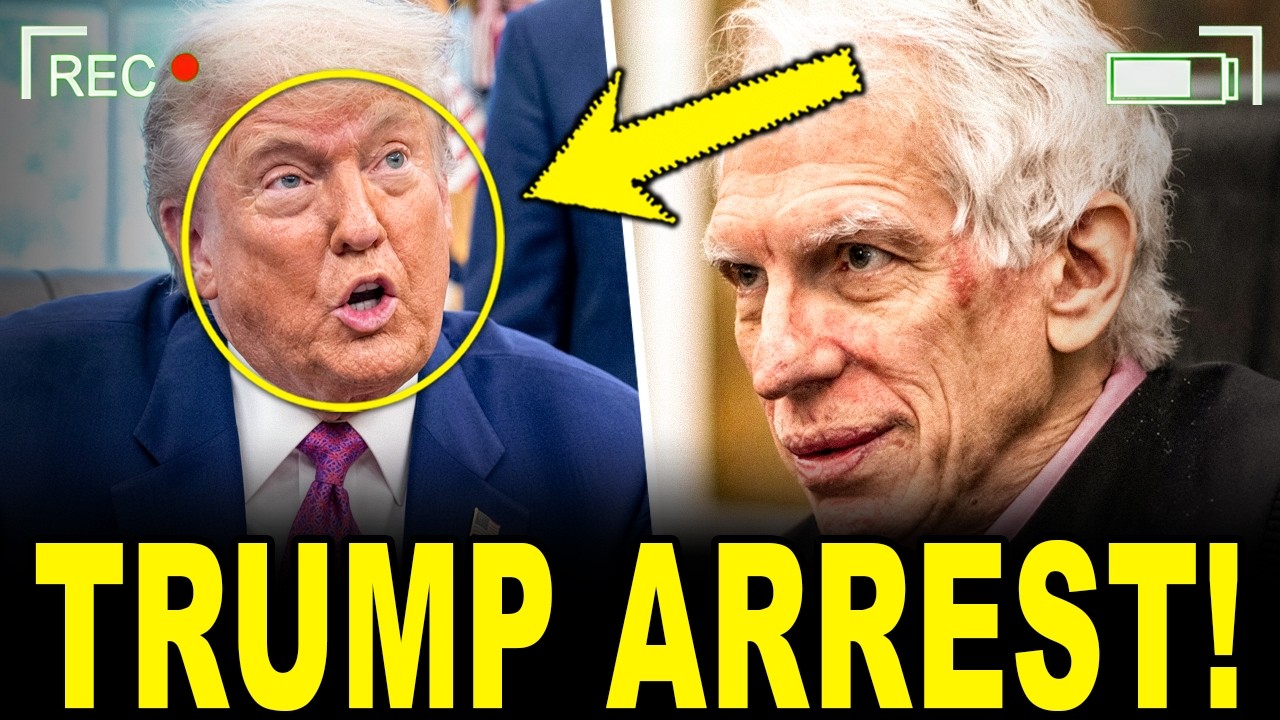
Judge Emmet Sullivan has reportedly expressed serious dissatisfaction with the DOJ’s handling of disclosure requirements.
The judge’s frustration has become one of the most significant developments in the ongoing fight over the Epstein Files Transparency Act.
The case was brought by journalist Katie Phang, who has challenged the government’s handling of Epstein-related records.
At the heart of the dispute are questions about redactions, withheld documents, foreign-language materials, and handwritten FBI interview notes.
The DOJ has defended some of its decisions by arguing that certain records are duplicative or legitimately subject to withholding.
But Sullivan appears unconvinced that the department has adequately explained its position.
That disagreement has now created a serious legal confrontation.
The judge has reportedly questioned whether the government is fully complying with previous disclosure orders.
More importantly, Sullivan has raised the possibility of civil contempt proceedings if the DOJ fails to follow the court’s requirements.
That possibility dramatically raises the stakes.
Civil contempt would not mean that Trump had been found guilty of a crime.
It would concern whether the Justice Department had obeyed the court’s orders regarding document disclosure.
That distinction is crucial because the Epstein story has generated an enormous amount of speculation online.
Names appearing in documents do not automatically establish criminal conduct.
Allegations contained within investigative records are not equivalent to judicial findings.
And the appearance of Trump’s name in Epstein-related material does not by itself establish wrongdoing.
Trump has denied wrongdoing related to Epstein.
Those facts need to remain separate from the larger transparency dispute.
The documented legal fight concerns the government’s compliance with disclosure requirements.
The political controversy surrounding Trump is a separate question.
Nevertheless, the two issues have become intertwined in public discussion.
That is why even a courtroom question involving Epstein can quickly become a major political headline.
The latest hearing reportedly intensified that attention.
According to the material provided, the DOJ arrived at court with documents that were expected before the hearing but had not previously been supplied.
A binder was reportedly handed to the court during the proceedings.
The government attempted to explain why certain records had been withheld or classified as duplicative.
But Sullivan continued pressing for more specific answers.
At one point, the judge reportedly questioned DOJ attorney Andrew Block about whether the department had additional information concerning disputed records.
The response, according to the transcript, was essentially that there might not be additional information available.
That exchange became particularly significant because Block had only recently entered the case.
The transcript suggests he was unfamiliar with some of the earlier decisions surrounding the documents.
That created an uncomfortable situation.
A federal judge was demanding answers about government disclosure decisions while the attorney representing the DOJ appeared unable to provide complete historical context.
For critics of the department, that reinforced concerns about transparency.
For the DOJ, however, the situation reflects the complexity of handling a massive collection of investigative records involving privacy, law enforcement information, and victims.
The disagreement therefore remains fundamentally legal.
What information must be released?
What information can legally remain redacted?
What explanation must the government provide for withholding specific records?
And has the DOJ complied sufficiently with the court’s previous orders?
Those questions could determine what happens next.
The most dramatic issue involves handwritten FBI interview notes.
According to the transcript, the DOJ has continued defending its decision to withhold certain handwritten notes connected to interviews conducted during the Epstein investigation.
The department reportedly argued that the notes were duplicative of later FBI memoranda.
Sullivan questioned that explanation.
The judge’s concern appears to be whether the government has provided enough information to justify keeping those records from disclosure.
That is a much narrower question than the sensational claims circulating online.
It is also potentially more consequential.
If the court concludes that the DOJ has failed to justify its withholding decisions, Sullivan could order additional disclosures.
If the department refuses or fails to comply, contempt proceedings could become a possibility.
That would create a significant institutional confrontation between the federal judiciary and the Justice Department.
The Epstein case has always carried extraordinary political weight because Epstein had documented relationships with influential individuals across politics, business, entertainment, and other powerful institutions.
That broad network is one reason the public continues demanding transparency.
The victims and survivors also have a profound interest in understanding what happened and what investigators knew.
The transparency law was created against that background.
It was intended to make Epstein-related government records more accessible while still accounting for legitimate privacy and legal protections.
The challenge is balancing those competing interests.
Some information may need protection.
Victims cannot simply be exposed to additional harm for the sake of transparency.
Private individuals who appear in investigative records may also have legitimate privacy rights.
Law enforcement-sensitive information can raise separate concerns.
But those protections do not necessarily allow the government to withhold everything.
That is where judicial oversight becomes important.
A judge can examine whether the government’s explanations actually satisfy the law.
Sullivan’s public criticism suggests he believes more justification may be required.
The transcript says Sullivan emphasized that the public, victims, and the court have a right to understand what is happening.
That statement has become one of the most significant moments in the coverage.
It suggests the court does not intend to simply accept broad explanations without examining the underlying records and legal reasoning.
The situation becomes even more politically complicated because Attorney General Todd Blanche previously served as Trump’s personal criminal defense lawyer.
That relationship does not establish wrongdoing.
Presidents routinely appoint trusted individuals to senior government positions.
But it can create legitimate questions about public perception and potential conflicts of interest when the department handles records involving matters connected to the president.
The issue is therefore one of institutional confidence.
Even if no improper conduct occurred, the appearance of a potential conflict can become politically consequential.
That is especially true in a case as sensitive as Epstein.
The public is already skeptical of government secrecy.
Any perception that political relationships are influencing disclosure decisions can intensify those concerns.
That is why Sullivan’s involvement matters.
The transcript describes Sullivan as a judge with a history of aggressively enforcing judicial authority when he believes government officials have failed to meet their obligations.
His involvement in the Michael Flynn case is cited as an example of his willingness to challenge government conduct.
Whether that history ultimately predicts what he will do here remains uncertain.
But his warning about possible contempt proceedings should not be dismissed as meaningless.
A federal judge raising contempt in open court creates real pressure.
The DOJ now has a clear incentive to demonstrate compliance.
That does not necessarily mean every disputed document will become public.
The court must still determine whether withholding specific material is legally justified.
The government may prevail on some documents.
The journalist challenging the DOJ may prevail on others.
The court could order additional explanations rather than immediate disclosure.
The case could therefore develop through several stages.
That complexity is important because the online discussion has often reduced the entire controversy to dramatic claims about Trump.
The actual legal proceedings are more complicated.
The central dispute is whether the government is complying with the law and the judge’s orders.

That is already significant without adding unsupported claims.
The Epstein files controversy also raises a broader question about governmental transparency.
How much information should the public receive when an investigation involves powerful individuals?
How should privacy protections be balanced against the public’s right to know?
Who decides whether a document is genuinely duplicative?
Who verifies that redactions are necessary?
And what happens when the government and a federal judge disagree?
Those questions extend far beyond Epstein.
They concern the balance between executive authority and judicial oversight.
They also concern whether transparency laws have meaningful enforcement mechanisms.
If an agency can delay production indefinitely by repeatedly claiming that records are duplicative, the effectiveness of disclosure laws could be weakened.
If courts can compel disclosure without considering legitimate privacy and law enforcement concerns, victims and uninvolved individuals could face additional harm.
The challenge is finding the legally appropriate balance.
That is precisely why this particular hearing matters.
Sullivan is not simply reacting to internet speculation.
He is examining government compliance in an active case.
The transcript makes clear that the judge has not ruled that Trump committed crimes.
He has not ordered Trump’s arrest.
He has not established the truth of allegations appearing in investigative records.
Those distinctions should not be lost in the political noise.
The strongest documented development is the judge’s dissatisfaction with the DOJ’s compliance.
That dissatisfaction could produce additional document releases.
It could produce more detailed explanations.
It could eventually lead to contempt proceedings.
And each possibility carries political consequences.
For Trump, the situation is politically uncomfortable even without a judicial finding against him.
His name has been associated with Epstein-related allegations in public discussion, and Trump has denied wrongdoing.
The continued release or examination of records could therefore generate renewed media scrutiny.
But scrutiny is not the same thing as criminal liability.
That distinction will become increasingly important as additional documents potentially emerge.
The public will likely encounter competing interpretations of every new disclosure.
Supporters may argue that documents prove nothing.
Opponents may argue that missing information suggests a cover-up.
Neither interpretation should automatically be accepted without examining the actual evidence.
The court’s role is precisely to separate those arguments from what can legally be established.
That is why Sullivan’s actions are attracting attention.
If he orders further disclosure, the DOJ will face another test.
If he finds the department’s explanations inadequate, the pressure will increase.
If contempt proceedings become necessary, the institutional stakes could rise dramatically.
But if the DOJ successfully demonstrates that withheld documents are protected under existing law, some records could remain sealed.
That outcome would also be significant.
It would show that transparency has limits even under a law designed to increase public access.
The case therefore cannot be reduced to a simple question of whether “the files will be released.”
The real question is which files, which portions, under what legal authority, and with what justification.
That is where the courtroom battle becomes far more interesting than the viral headlines.
The public also needs to keep victims at the center of the conversation.
Epstein’s victims have spent years seeking accountability.
Many were minors when they were abused.
Their experiences should not become secondary to political arguments over Trump, Democrats, Republicans, or the Justice Department.
Transparency matters partly because victims deserve answers.
But transparency must also avoid exposing victims to additional harm.
That tension is one of the hardest parts of the case.
The court therefore faces a difficult responsibility.
It must demand compliance while ensuring that legally protected information remains protected.
It must question government secrecy without assuming that every withheld document contains something explosive.
And it must distinguish allegations from proven facts.
That is exactly what makes Sullivan’s warning about possible contempt so consequential.
The warning places the DOJ on notice.
The government cannot simply say that documents are duplicative and expect the matter to end there.
It may need to provide detailed explanations.
It may need to produce additional records.
It may need to demonstrate why particular redactions are legally justified.
And if it fails to do so, the judge has indicated that stronger measures could follow.
The political ramifications could extend well beyond the courtroom.
Every additional filing could generate another wave of headlines.
Every newly released document could trigger another round of speculation.
Every redaction could become a subject of debate.
And every court order could place new pressure on the Justice Department.
That cycle may continue until the transparency dispute is resolved.
For Trump, the political challenge is equally obvious.
Even without a finding of wrongdoing, renewed attention to Epstein can create difficult questions.
The president and his supporters may argue that allegations are being weaponized politically.
Critics may demand maximum transparency.
The DOJ will be forced to navigate between those competing pressures while answering directly to the court.
That is an uncomfortable position for any administration.
Yet the strongest version of the story is not that Trump has been convicted or that a secret document proves criminal conduct.
The strongest version is simpler.
A federal judge is demanding answers.
The Justice Department is under scrutiny.
A journalist is challenging the government’s handling of records.
Victims have a documented interest in transparency.
And the court has warned that continued noncompliance could have consequences.
That is already a major story.
The question now is what the DOJ does next.
Will the department produce the missing explanations?
Will additional Epstein-related records become public?
Will the judge accept the government’s justifications?
Or will Sullivan move toward contempt proceedings?
Those questions remain unresolved.
And they are far more important than the sensational claims circulating online.
The next stage could determine whether the Epstein Files Transparency Act has real teeth when the government resists disclosure.
It could also determine how much information the public ultimately receives about one of the most controversial investigations in modern American history.
For now, the courtroom has become the battleground.
Not social media.
Not political rallies.
Not viral posts.
The courtroom.
And that is where the next major development is likely to emerge.
Because Judge Sullivan has made one thing unmistakably clear through his questioning and warnings: the DOJ will have to answer for what it has withheld, what it has released, and whether it has actually followed the court’s orders.
The question hanging over the case is no longer simply what might be inside the Epstein files.
It is whether the government can convincingly explain why the public still cannot see everything the law requires it to disclose.


