Caitlin Clark entered Team USA camp surrounded by questions about whether she would even start, but one practice combination may have completely changed the direction of that conversation.
For weeks, the loudest debate centered on whether Chelsea Gray’s championship experience would keep Clark in a reserve role despite Clark arriving with enormous momentum from international qualifying.
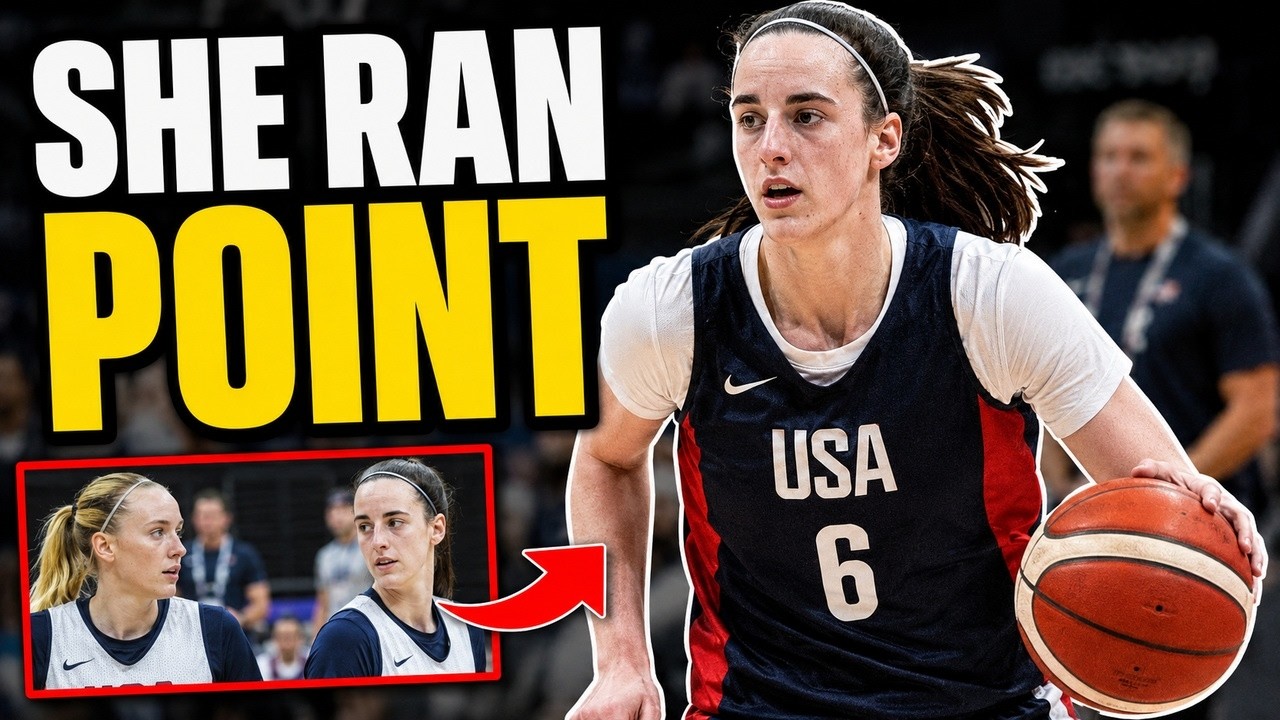
Then practice footage showed Clark bringing the ball up beside Paige Bueckers, Jackie Young, Napheesa Collier, and Aliyah Boston, instantly creating a much more uncomfortable question.
If that group represents something Kara Lawson genuinely wants to explore during meaningful World Cup minutes, the player suddenly fighting for position might not be Clark anymore.
That possibility is exactly why one short practice clip has generated so much attention, because Team USA’s point guard debate has never been only about popularity or headlines.
It is ultimately about identity, tempo, spacing, decision-making, chemistry, and which combination gives the Americans the most answers when an international opponent successfully disrupts their first plan.
Clark’s supporters had already pushed back against predictions suggesting she could come off the bench, particularly after her productive senior national team debut during World Cup qualifying.
According to the source, Clark was named tournament MVP in Puerto Rico after averaging 11.6 points and a tournament-best 6.4 assists following an eight-month injury absence.
That performance matters because it immediately weakens the argument that Clark should simply wait behind established veterans until she proves her style can translate internationally.
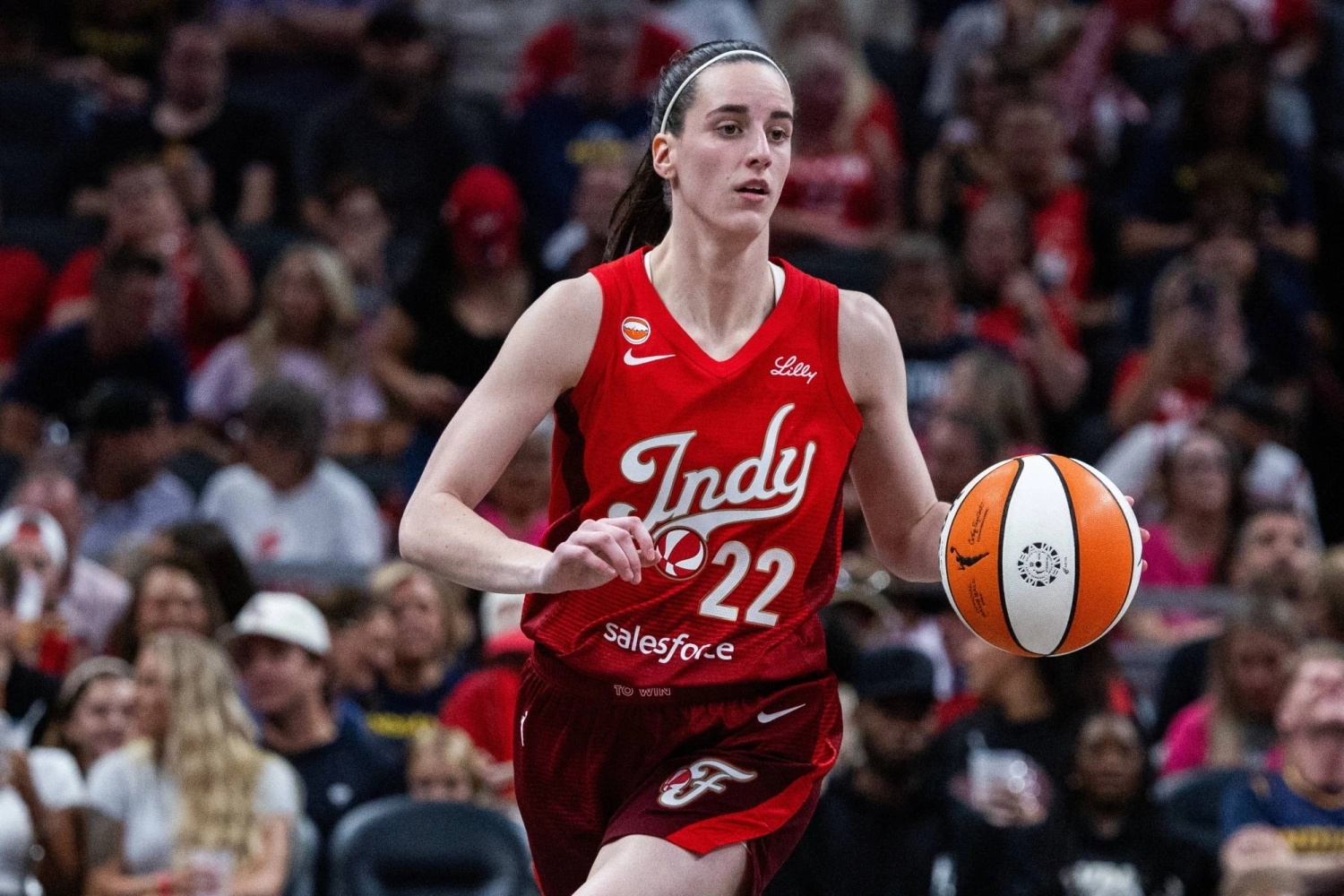
She already entered a USA Basketball environment, handled major creation responsibility, produced for teammates, and demonstrated that her passing could function inside a roster filled with high-level talent.
That does not automatically guarantee a starting position, but it does transform the conversation from projection into something much more difficult for coaches to dismiss.
Team USA is no longer wondering what Clark might theoretically look like inside international basketball because qualifying already gave the program a meaningful sample of her impact.
Chelsea Gray’s side of the argument remains extremely powerful because her résumé contains something Clark cannot manufacture simply by playing well during one qualifying tournament.
Gray owns years of Team USA experience, has competed during championship runs, and has been trusted during high-pressure possessions where familiarity and decision-making become more important than highlights.
Lawson’s own comments emphasize exactly those qualities, describing Gray’s confidence, intelligence, continuity, and ability to perform when games become difficult and important.
Those words matter because coaches preparing for short international tournaments often value stability far more than fans watching from outside the program sometimes realize.
One disastrous stretch can change an elimination game, and experienced guards who understand terminology, defensive coverages, late-clock management, and tournament pressure provide enormous value.
That is the strongest argument for keeping Gray heavily involved, and pretending her experience suddenly means nothing because Clark arrived would oversimplify the coaching challenge.
But experience and starting responsibility are not automatically the same thing, which is where the practice footage makes the entire debate considerably more complicated.
A veteran can remain essential to a championship roster without controlling the opening possession, just as a younger guard can start without replacing everything that veteran provides.
That distinction becomes critical when examining the specific group seen around Clark, because the combination appears to have genuine basketball logic rather than looking randomly assembled.
Clark and Bueckers immediately provide two different creators capable of initiating offense, reading pressure, attacking space, and making decisions before the defense completely organizes itself.
Clark’s greatest structural advantage is how far away from the basket defenders must begin respecting her shooting, creating enormous pressure before she even enters a traditional action.
Bueckers offers another calm decision-maker who can function with or without the ball, reducing the need for Clark to manufacture every meaningful possession herself.
Jackie Young adds another capable handler, perimeter defender, and connective player who can contribute without requiring Team USA to redesign the entire offense around her.
Collier gives the group switchability and defensive intelligence, providing someone capable of handling multiple assignments while still functioning smoothly beside other high-usage stars.
Boston supplies interior strength, rebounding, screening, and an already established connection with Clark that could become especially valuable during a tournament with limited preparation time.
That last point deserves far more attention because chemistry is often treated like a luxury when national teams are assembled, even though compressed preparation makes chemistry enormously valuable.
Clark already knows where Boston prefers receiving the ball, Boston understands Clark’s passing timing, and both players have experience recognizing each other’s movement during live possessions.
That familiarity removes one variable from a roster filled with players coming from completely different systems, terminology, spacing habits, and offensive responsibilities.
Add Bueckers into that structure and Team USA suddenly has three players capable of connecting possessions instead of allowing the offense to become a sequence of isolated stars taking turns.
That concept may be the most important element behind the practice footage because talent alone has never been Team USA’s problem against international competition.
The Americans routinely possess more individual ability than their opponents, meaning the larger challenge often involves creating combinations where that talent actually amplifies rather than interrupts itself.
Clark naturally addresses that problem because her game is built around creating the next advantage quickly instead of holding the basketball until every defender resets.
When she pushes after rebounds, advances passes early, or attacks before the defense establishes its preferred coverage, Team USA can force opponents into uncomfortable decisions immediately.
That style could become especially valuable if Lawson wants the Americans playing with more pace instead of relying almost exclusively on deliberate half-court execution.
And that is where Gray’s role becomes fascinating because she represents almost the opposite type of strength without necessarily representing an inferior one.
Gray can organize difficult possessions, manipulate defensive coverage, control rhythm, and keep an offense composed when a game becomes slower and more physical.
Clark can accelerate possessions, stretch defensive geometry, and create openings before opponents fully understand which matchup they are supposed to protect.
Those are completely different tools, and an elite national team may benefit more from having both available than from trying to permanently declare one superior.
The mistake would be interpreting the starting lineup as an irreversible ranking instead of treating it as one tactical answer among several possible combinations.
That is why the closing lineup may eventually become more revealing than whoever stands at center court when Team USA’s first World Cup game begins.
Closing groups need creators who can survive pressure, defenders capable of switching, enough size to rebound, and multiple decision-makers when the original action breaks down.
A Clark-Bueckers-Young-Collier-Boston unit satisfies many of those requirements while allowing Lawson to attack defenses from several different directions without becoming dependent on one player.
If an opponent traps Clark, the basketball can move immediately toward Bueckers, who can attack the numerical advantage before the defense fully recovers.
If defenders switch the action, Boston can punish a smaller matchup inside while Collier or Young attack whichever rotation becomes exposed elsewhere.
If opponents load the paint, Young and Bueckers can exploit space while Clark’s range continues forcing defenders farther from comfortable help positions.
That is what makes the practice combination more meaningful than a simple headline about Clark possibly starting over Gray.
It provides one potential answer to the much harder question of which lineup gives Team USA the greatest number of solutions when the first option disappears.
However, the conversation becomes even more difficult once Breanna Stewart enters the equation because any serious Team USA rotation discussion eventually has to account for her versatility.
Stewart’s scoring, size, championship experience, and ability to function across several positions make her almost impossible to exclude from major late-game combinations.
If Lawson inserts Stewart into the unit seen during practice, somebody has to leave, and every possible decision creates a different advantage while sacrificing something valuable.
Removing Boston creates more spacing and flexibility, but it also gives away some traditional interior size and physicality against opponents capable of attacking the paint.
Removing Young allows Team USA to become bigger, but it can reduce perimeter defensive balance and place additional ball-handling responsibility on Clark and Bueckers.
Removing Bueckers sacrifices another elite creator, while removing Clark changes the pace, shooting range, and transition pressure Lawson might be trying to establish.
Replacing Clark with Gray increases international continuity and late-game composure while creating a different rhythm around the rest of the lineup.
That is why Team USA’s depth should not produce one permanent answer because the strongest five against one opponent may look completely different two days later.
Against a physical team dominating the interior, Boston’s size could become far more important than another perimeter creator or switchable wing.
Against a smaller team aggressively switching ball screens, Stewart operating at center might create spacing and matchup problems that become impossible to contain.
Against opponents applying relentless guard pressure, using Clark, Bueckers, and Young together could give Team USA enough handlers to punish every attempted trap.
The point is that Lawson’s rotation should function like a puzzle rather than a popularity ranking based on which individual players possess the largest résumés.
That philosophy also provides the cleanest way to resolve the Clark-Gray controversy without diminishing either guard or pretending only one approach can work.
Lawson could begin certain games with Clark controlling a high-tempo unit before introducing Gray when possessions become more deliberate and opponents successfully slow the pace.
She could reverse the structure against another opponent, allowing Gray to establish organization before Clark enters and immediately changes the geometry and speed of the offense.
Both structures can work if the roles are intentional, because the real danger comes from giving stars minutes without giving those minutes a clear purpose.
If Clark is on the floor, Team USA should use the advantages that make Clark unique rather than parking her away from the ball like an ordinary spot-up shooter.
Her value comes from transition passing, deep shooting gravity, early reads, pick-and-roll manipulation, and the ability to create defensive mistakes before they become obvious.
Using Clark while allowing another guard to slowly dominate every possession would waste several of the reasons her supporters believe she deserves major responsibility.
The same principle applies to Gray because her presence matters most when Team USA actually allows her intelligence and control to organize difficult possessions.
Great coaching is not simply distributing enough minutes to keep famous players satisfied; it is matching each player’s strengths with specific problems the opponent presents.
Lawson now appears to have one of the deepest collections of guards imaginable, which means her challenge is abundance rather than shortage.
That abundance will become more difficult to manage because every substitution involving Clark is guaranteed to receive far more scrutiny than a normal international rotation decision.
Clark’s absence from the 2024 Paris Olympic roster created a national debate that still shapes how supporters interpret almost every new Team USA decision involving her.
Now she has returned two years later as part of the World Cup roster, carrying both recent international success and enormous public expectations into another major tournament.
If Clark starts, many fans will immediately describe it as a changing of the guard and evidence that USA Basketball finally understands where the future is heading.
If she comes off the bench, others will accuse Team USA of being unnecessarily conservative or valuing seniority over current impact.
If she closes games despite technically remaining a reserve, the entire controversy could change again because late-game responsibility usually reveals more than ceremonial starting status.
That is why observers should watch Lawson’s first substitution patterns more closely than the opening introductions when meaningful World Cup basketball begins.
If Clark does not start but checks in quickly and immediately becomes the primary organizer, that would suggest Lawson views the bench label as mostly structural.
If Clark starts but spends most possessions standing away from the action while somebody else controls every important decision, the starter label would mean considerably less.
Minutes matter, but role provides better evidence because responsibility reveals what a coach actually believes about a player’s value inside competitive possessions.
Who brings the basketball up after made baskets, who initiates the high pick-and-roll, and who receives the outlet following defensive rebounds will reveal Team USA’s true offensive hierarchy.
Who controls possessions after timeouts and who remains on the floor when an opponent begins trapping aggressively will tell fans even more.
Those moments will eventually determine whether this practice clip represented a legitimate preview or simply another experimental combination during preparation.
Still, Clark’s qualifying performance makes it difficult to treat her presence with the first unit as meaningless because Lawson has already seen evidence of international translation.
Clark reportedly returned from an eight-month injury absence and still produced tournament MVP-level basketball while leading the qualifying event in assists.
That matters because the strongest argument against giving younger players major roles is normally uncertainty about how quickly they can adjust to international competition.
Puerto Rico reduced that uncertainty considerably by showing Clark could create for teammates, score enough to command attention, and handle national-team responsibility immediately.
Lawson has also publicly acknowledged Clark’s improvement, describing her as someone continuing to play at a high level while developing across several areas.
Place that praise beside Lawson’s glowing description of Gray and the actual dilemma becomes much clearer than any simplistic veteran-versus-young-star narrative.
Gray represents trust built through years of championship basketball, while Clark represents a rising creator whose present form could raise Team USA’s offensive ceiling.
Neither description requires the other player to become obsolete because championship teams frequently need different styles depending on how opponents attack them.
The controversial question is whether Lawson prioritizes continuity from the opening possession or aggressively leans into the player capable of changing the offense’s pace immediately.
There is also a third possibility that might ultimately prove smarter than choosing one philosophy permanently: Lawson can use both guards in clearly defined situations.
Gray can stabilize half-court stretches when Team USA needs composure, while Clark can accelerate tempo and force opponents to defend far more space.
That flexibility becomes a luxury rather than a problem if the coaching staff remains willing to adjust instead of protecting a predetermined hierarchy.
The practice unit becomes particularly intriguing because every player appears to possess a recognizable purpose instead of simply sharing the floor because of individual reputation.
Clark creates initial pressure, Bueckers provides secondary creation, Young connects actions, Collier handles defensive versatility, and Boston supplies interior strength and chemistry.
Replace Boston with Stewart and the structure changes toward greater spacing and offensive versatility while sacrificing some traditional interior physicality.
Replace Young with Stewart and Team USA becomes dramatically bigger, but Clark and Bueckers inherit more responsibility defending and organizing the perimeter.
Replace Clark with Gray and the offense gains continuity and control while sacrificing some of the pace and long-range pressure Clark naturally creates.
Every decision creates something and removes something, which is why practice experimentation should continue instead of being interpreted as a final declaration.
But the symbolism surrounding Clark means even experimentation becomes headline material because supporters already believed predictions of a reserve role underestimated what she had earned.
Then the footage showed her handling the basketball with a unit that looked balanced, functional, and potentially capable of playing meaningful tournament minutes.
That visual changed the emotional direction of the debate because suddenly the question was no longer whether Clark could crack the most important groups.
The question became whether someone with far more Team USA experience might ultimately have to sacrifice opening minutes if Lawson decides this faster combination works better.
Gray’s résumé guarantees that decision would become controversial, especially because her supporters can point toward Olympic gold medals and years of proven performance.
Clark’s supporters can respond with recent qualifying MVP recognition, chemistry with Boston, accelerating development, and a style that could expand Team USA’s offensive possibilities.
Both cases are legitimate, which means the first real games will provide far more useful evidence than another week of theoretical lineup predictions.
If the Clark-led unit produces cleaner possessions, greater spacing, quicker decisions, and better transition opportunities, pressure to keep that group together will grow rapidly.
If Gray enters and immediately stabilizes difficult stretches against experienced opponents, her value could become equally obvious and silence anyone treating her résumé as merely historical.
The smartest outcome for Team USA would be discovering that both styles can coexist rather than allowing the public debate to force a false choice.
The most dangerous outcome would be allowing status or external noise to determine roles instead of responding aggressively to what actual tournament basketball reveals.
Clark has already built a strong enough case to deserve more than a ceremonial bench role if her strengths continue producing the best offensive results.
Gray has already accomplished enough internationally that removing her from meaningful responsibility without a genuine basketball reason would be equally difficult to justify.
That leaves Lawson with the exact type of problem championship coaches are supposed to solve: too many elite options competing for limited high-leverage possessions.
And that is why one ordinary practice clip suddenly became something much bigger than a few players wearing different colored jerseys.
It showed Clark directing a unit that made basketball sense, featured multiple creators, protected defensive balance, and already contained chemistry capable of surviving compressed preparation.
If that group appears again when the World Cup begins, the entire conversation surrounding Clark’s supposed reserve role could collapse almost immediately.
And if Clark ultimately closes tight games beside Bueckers, Young, Collier, Boston, or Stewart, the opening starter controversy may end up looking almost irrelevant.
Because in international basketball, the five players trusted when everything becomes uncomfortable usually reveal far more than the five names announced before the opening tip.
The next question is no longer simply whether Caitlin Clark starts ahead of Chelsea Gray.
It is whether Kara Lawson has already discovered a Team USA lineup too dangerous to keep off the floor.


