Brandi Passante’s Darrell Sheets Tribute Was Real, but the Viral “Secret Mental-Health Confession” Story Overstates What She Actually Said
The death of Storage Wars veteran Darrell Sheets devastated fans and former castmates, and Brandi Passante did respond publicly with an emotional message.
But the newest viral version substantially changes what she actually said.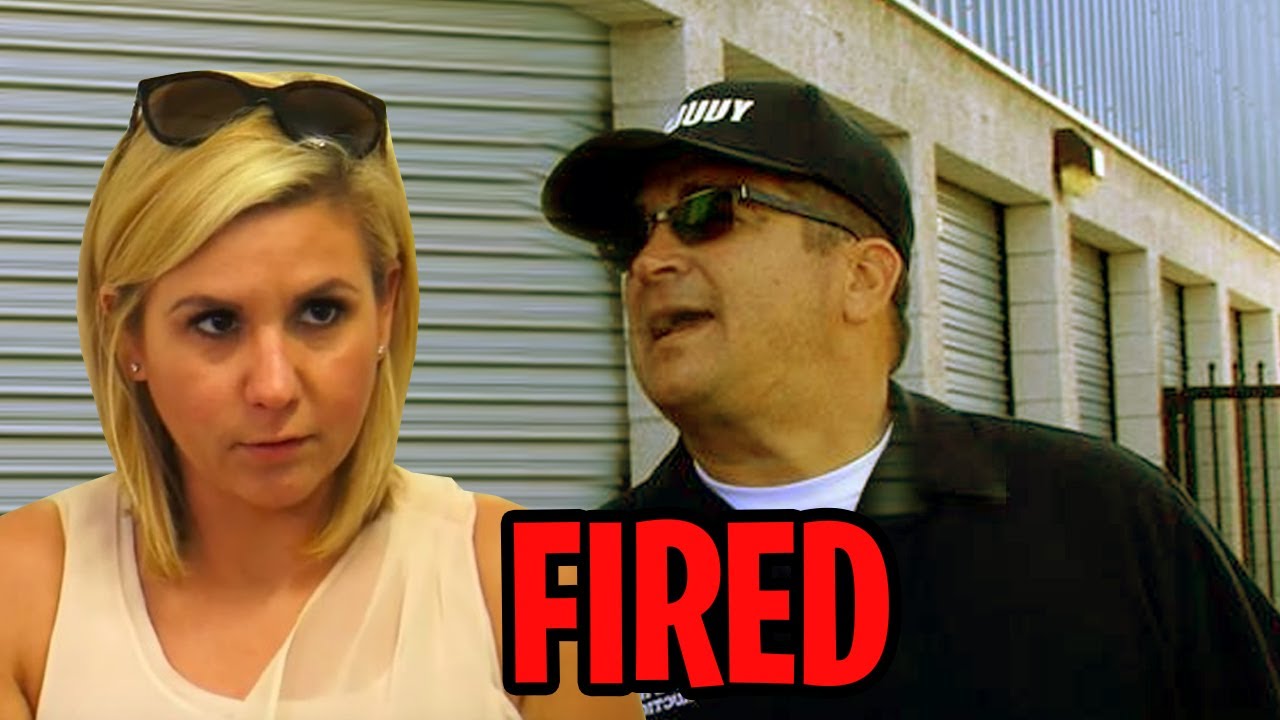
Sheets, known throughout the A&E series as “The Gambler,” died April 22, 2026, at age 67.
The Mohave County Medical Examiner later ruled his death a suicide.
His toxicology testing reportedly found no drugs in his system at the time of death.
That distinction is important because the known investigation has centered on his emotional circumstances rather than intoxication or a fatal drug episode.
Passante posted her tribute shortly after news of Sheets’ death became public.
She said she was “at a loss for words” and expressed sympathy for his son Brandon, granddaughter Zoe, and other loved ones.
She also explained that suicide had affected her own family through the loss of a parent and a brother.
Her message then became a direct plea to anyone feeling hopeless.
Passante urged people not to suffer silently and reminded followers that help exists.
That part of the viral story is therefore grounded in reality.
Brandi really did use Darrell’s death to urge struggling people to seek support.
What she did not publicly do was reveal a detailed secret history of Darrell’s private mental-health battles.
No credible report reviewed shows Passante describing prolonged depression, psychiatric treatment, concealed diagnoses, or a private struggle she personally witnessed behind the scenes.
Her statement was much more careful.
She referred to the circumstances of his death, expressed grief, and spoke broadly about hopelessness and suicide prevention.
The cyberbullying allegation came initially from another Storage Wars cast member.
René Nezhoda publicly said Sheets had recently been targeted online by someone he believed was tormenting him.
Nezhoda specifically urged law enforcement to investigate those allegations after Sheets died.
Police confirmed shortly afterward that they were aware of the cyberbullying accusations and were examining them.
That means the cyberbullying issue was real enough to become part of an official investigation.
It still should not be rewritten as something Passante personally exposed through a private confession.
Those are different sources.
The distinction became even more significant months later.
Police records released in July reportedly showed investigators found a handwritten note referencing Facebook bullying.
According to TMZ’s description of the police report, the note indicated Sheets felt overwhelmed by the online harassment.
That is stronger evidence linking cyberbullying with his distress than existed immediately after his death.
It does not mean every detail publicly alleged about the suspected bully was proven.
Police reportedly examined phones, interviewed witnesses, and investigated the accusations for months.
The inquiry ultimately closed without criminal charges.
That outcome matters.
It means authorities took the allegations seriously enough to investigate but did not produce a criminal prosecution.
Responsible reporting should preserve both facts.
There was credible evidence Sheets felt tormented by online behavior.
There was also no resulting criminal charge against the person investigated.
The viral claim instead compresses that complicated timeline into a single dramatic revelation supposedly delivered by Brandi.
That is not what the record shows.
Passante’s tribute actually appeared on April 23, the day after Sheets died.
At that point, the later police records had not been publicly released.
She therefore could not have been publicly explaining evidence from the July investigative file.
Her own message focused largely upon the devastation created by suicide.
She warned that ending one person’s pain transfers grief to those left behind.
That language was deeply personal because of the losses she had already experienced within her own family.
It should not be repackaged as an insider medical assessment of Sheets.
The phrase “private mental-health struggles” is particularly broad.
Sheets may unquestionably have been experiencing severe emotional distress at the end of his life.
The circumstances of his death and the reported note make that difficult to dispute.
But there is a difference between distress and a documented psychiatric diagnosis.
No public medical record reviewed identifies a specific mental-health diagnosis.
No treating clinician has publicly described a psychiatric treatment plan.
No credible report says Passante had access to confidential clinical information.
The publicly released police material instead reportedly described several immediate stressors.
Sheets’ girlfriend told investigators he had been having difficulty sleeping and appeared frustrated before his death.
Police records also reportedly referenced family tension shortly before he died.
Those details provide context.
They do not justify inventing a complete private psychiatric history.
The cyberbullying evidence itself also emerged in stages.
Nezhoda initially told the public that someone had been harassing Sheets online.
Police then acknowledged they would examine that allegation.
Months later, the incident report and note supplied additional context.
Investigators continued pursuing the alleged harasser.
Eventually the case ended without charges.
That sequence is far more accurate than saying Passante suddenly “shattered the silence” by exposing everything.
Passante was one of several castmates who mourned Sheets.
Dave Hester also paid tribute after his death.
Nezhoda spoke about the cyberbullying allegations.
A&E issued a statement expressing sympathy to Sheets’ family and loved ones.
The network later aired an on-screen memorial honoring him.
His son Brandon eventually posted one of the most personal tributes.
Brandon said he would try to live in his father’s honor and preserve the family legacy associated with “Darrell ‘The Gambler’ Sheets.”
That is the closest thing to an official family memorial message widely reported afterward.
Brandon also made clear he was not ready to answer every question surrounding his father’s death.
He asked people instead to remember the good in Darrell and allow the family time to process the loss.
That request for space is important.
It contrasts sharply with viral posts promising secret family documents through direct messages.
No credible source currently reports an undisclosed “official family memorial release” containing sensational new evidence.
Brandon’s public tribute is already available through reputable reporting.
There is no need to comment a keyword to obtain it.
The description of Brandi and Darrell as having a father-daughter relationship is also more fan interpretation than documented fact.
They worked together for many years on Storage Wars.
Passante said she had known Sheets for a long time.
Photos and behind-the-scenes memories clearly show familiarity between them.
But no credible report reviewed establishes that either publicly described the relationship literally as father and daughter.
Fans may have perceived a generational dynamic because Sheets was considerably older and had been a veteran presence on the series.
That should be described as audience perception rather than a factual family-like relationship they publicly defined.
Sheets became one of Storage Wars’ most recognizable personalities after joining the series in 2010.
His aggressive bidding style and willingness to gamble on uncertain lockers earned him his television nickname.
He appeared across numerous seasons before retiring from the program in 2023.
Afterward, he lived in Lake Havasu City, Arizona, and operated an antique shop.
That relatively quiet post-television life makes the circumstances surrounding his death especially jarring for long-time viewers.
People reported that he had even been photographed appearing cheerful shortly before he died.
That image became one of the most haunting parts of the story.
It also reinforced an important point repeatedly made by his colleagues afterward.
External appearance is not a reliable measure of internal distress.
Someone can smile publicly and still be suffering severely.
Passante’s message centered upon exactly that broader human reality.
She did not claim to have known every detail of Sheets’ internal struggle.
Instead, she urged people who feel hopeless to tell someone.
That difference makes her actual statement more responsible than the viral reconstruction.
It avoids pretending outsiders can always detect suicide risk.
It focuses upon intervention and connection instead.
The later cyberbullying investigation makes that message even more painful in retrospect.
Police reportedly found evidence that Sheets himself believed the online behavior had become unbearable.
Yet investigators still had to determine exactly what conduct occurred and whether it met criminal standards.
That distinction matters because “cyberbullying” can describe a broad range of behavior.
Some conduct may be cruel without being criminal.
Some may constitute harassment.
Some may involve threats.
Some may simply be repeated hostile communication.
Investigators must examine the actual messages rather than relying solely upon labels.
Police reportedly analyzed Sheets’ phone as part of that inquiry.
That investigative step shows authorities were attempting to build an evidence-based timeline.
It also highlights why social-media speculation should not be treated as equivalent to police findings.
The eventual decision not to file charges does not mean Sheets imagined his distress.
It means the evidence did not result in a criminal case.
Those are different questions.
His subjective suffering can be real even when prosecutors cannot establish a charge.
The same principle applies to mental health.
Sheets could have been experiencing extreme emotional pain without the public possessing a complete psychiatric record.
There is no need to fabricate hidden clinical information to acknowledge that reality.
The official cause-of-death process also moved more quickly than many celebrity cases.
By early May, the medical examiner had formally classified the manner of death as suicide.
Later autopsy reporting said toxicology was negative for substances including cocaine and fentanyl.
That makes claims about secret substance abuse especially inappropriate unless independently supported.
The available medical evidence does not indicate drugs were driving the fatal event.
The investigation instead focused increasingly on emotional circumstances and online conflict.
That context gives Nezhoda’s early remarks greater significance.
He had publicly urged police not to dismiss the harassment allegations.
Months later, police records showed investigators had indeed taken them seriously.
But even then, Nezhoda’s statements and Brandi’s statements should not be merged.
Nezhoda spoke specifically about the alleged tormentor.
Brandi spoke primarily about grief, hopelessness, and reaching for help.
Both responses mattered.
They served different purposes.
The newest viral framing combines them into one more dramatic “leaked statement.”
There is no credible evidence of such a leak.
Passante’s tribute was posted publicly to Instagram.
News outlets quoted it openly.
People, Entertainment Weekly, TMZ, and other entertainment publications all reported the message.
Something shared intentionally with followers is not a leaked statement.
Calling it “leaked” makes ordinary public material sound secret.
That language also supports the artificial urgency of the CTA.
The post tells users to comment “DARRELL” to obtain the “full unedited statement.”
But Brandi’s message has already been reproduced substantially by mainstream entertainment outlets.
There is no evidence a longer hidden version exists.
The publicly reported post begins with her saying she was at a loss for words and expressing condolences.
It then references the suicide losses in her own family.
Finally, it urges struggling people to seek assistance rather than suffer silently.
That is the substantive statement.
No credible report says an unreleased extended interview contains additional revelations about Darrell.
Likewise, the alleged memorial release is not something fans need to obtain through private messages.
Brandon’s tribute has been reported publicly.
A&E’s tribute has been reported publicly.
The network displayed an “In Memoriam Darrell Sheets” card on Storage Wars.
Those are genuine memorials.
A hidden official family document has not been established.
The tragedy surrounding Sheets therefore contains enough verified information without manufacturing exclusivity.
He was a beloved reality-TV personality.
He died by suicide.
His family and colleagues were devastated.
Brandi Passante publicly urged people experiencing hopelessness to ask for help.
René Nezhoda said Sheets had been targeted by online harassment.
Police investigated.
Later records reportedly showed Sheets himself referenced Facebook bullying.
And investigators ultimately closed the cyberbullying case without criminal charges.
Those facts already tell a difficult story about online cruelty, grief, and uncertainty.
They also demonstrate why suicide narratives require unusual care.
One factor should not automatically be described as the sole cause of a death.
Even when a note references harassment, human behavior can involve multiple simultaneous stresses.
Police records reportedly described insomnia and family conflict in addition to the online bullying allegations.
That complexity does not diminish the potential impact of cyberbullying.
It prevents outsiders from reducing a person’s final decision to one simplistic explanation.
Nezhoda clearly believed the online behavior mattered.
Sheets’ reported note apparently did too.
Police treated the allegation seriously.
But a responsible account should still say the investigation examined cyberbullying rather than declaring one person legally caused his death.
No one was criminally charged following that inquiry.
The rumor’s language about “severe mental-health struggles” also deserves similar precision.
Passante’s appeal to anyone feeling hopeless was a general suicide-prevention message.
It was informed partly by her own family losses.
It did not amount to a clinical disclosure about Sheets.
The distinction protects both accuracy and dignity.
When someone dies by suicide, every ordinary action from the preceding days can suddenly be reinterpreted as an obvious warning.
But Sheets’ final public photograph reportedly showed him appearing cheerful with a fan.
His brother later told police he never imagined Darrell would die this way.
His girlfriend reportedly said he had not threatened suicide beforehand.
Those accounts illustrate how difficult prediction can be.
They also show why claims that co-stars secretly knew about an extended crisis require direct evidence.
No credible source says Brandi had that knowledge.
Her grief appears rooted partly in surprise.
She explicitly said she was at a loss for words.
That reaction does not resemble someone publicly unveiling a long-known hidden battle.
It resembles someone processing devastating news.
The connection between Brandi’s own family history and her response should also not be overlooked.
She said she had lost both a parent and a brother in similar circumstances.
That personal experience explains why her statement moved quickly from remembering Darrell toward speaking directly to people in distress.
She understood the grief left behind.
Her message was therefore less an investigative disclosure than a prevention plea.
That is what made it powerful.
Turning it into a teaser for a secret interview weakens the actual point she was making.
She wanted people to reach out before their pain became irreversible.
The public reporting around Sheets’ family carried the same theme of unresolved grief.
Brandon described his heart as broken and said he wanted to preserve his father’s legacy.
He also said he could not answer everyone’s questions.
That acknowledgment is important.
Even immediate family members were still processing what happened.
A viral post claiming outsiders possess a complete hidden explanation should therefore be treated cautiously.
The investigation itself shows how slowly answers emerged.
Initial reports established an apparent suicide.
The medical examiner later formalized the ruling.
Autopsy and toxicology information followed.
Police continued examining cyberbullying allegations.
The investigative records emerged months later.
Only then did the reported note become part of the public record.
That chronology is much more credible than a single dramatic “leaked statement” revealing everything immediately.
The A&E community also responded collectively rather than through one exclusive spokesperson.
Nezhoda remembered Sheets’ dedication to his family despite their onscreen rivalry.
Dave Hester publicly honored him.
Passante shared her emotional plea.
A&E aired a memorial.
Brandon later spoke for the family.
Each response revealed a different part of how Sheets was remembered.
None establishes that Brandi was chosen to expose his private struggles.
Her statement never claimed that role.
The public record instead supports a more measured conclusion.
Darrell Sheets’ death really did shock the Storage Wars community.
Brandi Passante genuinely posted an emotional tribute.
She genuinely urged anyone experiencing hopelessness to reach out for help.
She genuinely connected that appeal with suicide losses in her own family.
René Nezhoda—not Brandi—was the co-star who initially spoke publicly about alleged cyberbullying.
Police then incorporated those allegations into their investigation.
Later police records reportedly revealed a note in which Sheets referenced Facebook bullying.
Investigators ultimately did not bring criminal charges against the person accused of harassing him.
Brandon Sheets later issued a deeply personal public tribute to his father.
A&E also memorialized Darrell on the program.
Those are the documented statements.
There is no verified “full leaked interview” in which Brandi reveals a secret psychiatric history.
There is no credible evidence that she personally exposed details of the cyberbullying investigation.
And there is no need to comment a keyword to obtain the already-public family and cast tributes.
The genuine story is already painful enough.
A veteran reality star died by suicide.
His colleagues mourned him.
Evidence later suggested online harassment had deeply affected him.
Police investigated that allegation.
His son asked people to remember the person behind the television personality.
And Brandi Passante used her grief to deliver one simple message to anyone suffering privately: reach out rather than suffer alone.


