Sophie Cunningham’s rapidly changing role with the Indiana Fever has created a legitimate basketball mystery. After establishing herself as an effective perimeter shooter and important rotation player, Cunningham suddenly began receiving dramatically fewer minutes near the end of the regular season. Her reduced playing time naturally produced questions about Indiana’s rotation, Stephanie White’s coaching decisions and Cunningham’s future with the franchise.
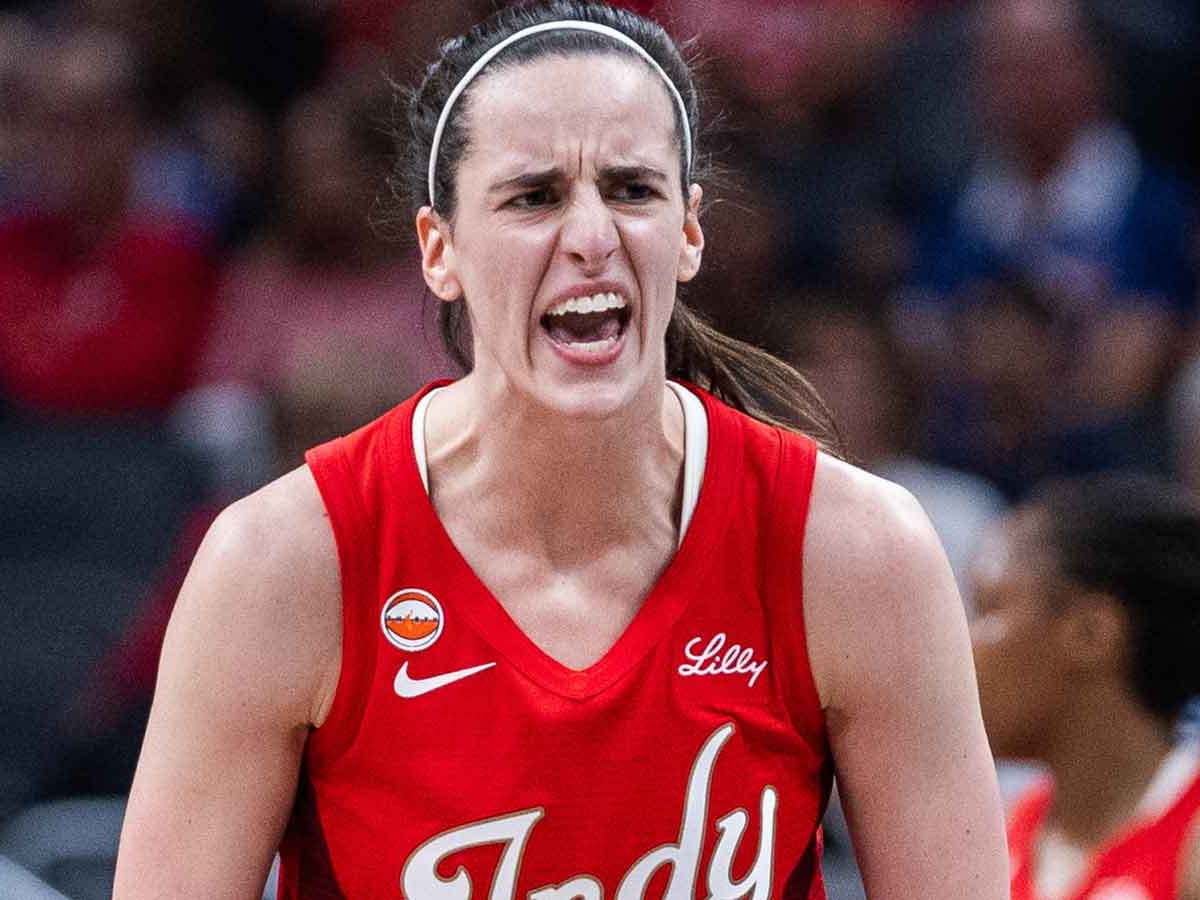
But a sensational online narrative has transformed those reasonable questions into an unsupported story about punishment, sabotage and an extraordinary locker-room rebellion led by Caitlin Clark.
According to the viral account, White was so threatened by Cunningham’s chemistry with Clark that she manufactured defensive mistakes, removed Cunningham from the lineup and attempted to have her permanently banned from the Fever’s facility. Clark allegedly responded by confronting White, threatening to boycott games and promising a massive hostile-work-environment lawsuit against both the coach and the organization.
It is a cinematic story. It is also unsupported by credible evidence.
There is no verified recording of Clark issuing such an ultimatum. No reliable reporter has confirmed that Cunningham was facing a suspension or ban. Neither Clark nor Cunningham has announced a lawsuit, and the Fever have issued no statement suggesting that White tried to remove Cunningham from the organization.
The fabricated confrontation should therefore not be presented as fact. However, the uncertainty surrounding Cunningham’s role is real—and it deserves a serious examination based on basketball evidence rather than invented dialogue.
Why Cunningham’s Minutes Raised Questions
The controversy began with a statistical pattern that fans could see clearly.
Cunningham opened the season with a significant role and spent time in Indiana’s starting lineup. Even after moving to the bench, she remained productive. By the All-Star break, she was reportedly averaging approximately 9.4 points while shooting close to 44 percent from three-point range, numbers that placed her in discussions about the league’s top reserve players.
Those shooting numbers mattered because Cunningham appeared to fit naturally beside Clark. Opponents frequently commit extra defenders toward Clark, especially in high ball-screen actions. A reliable weak-side shooter can punish that attention by staying ready for kickout passes, relocating along the arc and attacking closeouts.
Cunningham also brought physicality, emotional energy and a willingness to run in transition. When Clark accelerated the offense, Cunningham was often prepared to sprint into open space instead of waiting for Indiana to establish a slower half-court possession.
That is why the late-season decline in her minutes seemed so strange.
Across one four-game stretch referenced in the source material, Cunningham played approximately 11, 14, 19 and seven minutes. The seven-minute appearance against Washington was reportedly her lowest total of the season. She entered late in the first quarter, disappeared throughout the second and returned only briefly later in the game.
For a player who had contributed meaningful shooting for much of the season, that distribution understandably looked unusual. It was not simply that Cunningham had been moved to the bench. Her opportunity to establish any rhythm had nearly disappeared.
A shooter cannot easily influence a game while receiving two-minute appearances separated by long stretches on the bench. The lack of continuity affects shot preparation, defensive awareness and confidence. That does not mean coaches must guarantee minutes regardless of performance, but it does make White’s rotation a legitimate subject for examination.
White’s Public Explanation
White’s explanation reportedly centered on defense, rebounding and the need to put Cunningham and Lexie Hull in better offensive positions. She also cited those areas when explaining why Raven Johnson received additional minutes.
That reasoning is not inherently illogical.
Coaches often choose a defensive guard over a shooter when the team is struggling to contain dribble penetration or apply pressure at the point of attack. Johnson’s ability to disrupt ballhandlers may have offered Indiana something that Cunningham did not provide at the same level.
The problem was not merely the decision to play Johnson. It was the scale and timing of the change.
Indiana appeared to be experimenting with major rotation adjustments more than 40 games into the season. Players who previously received limited opportunities suddenly entered prominent roles, while established contributors lost minutes without a clearly communicated transition. That can make a team look uncertain just as playoff rotations are normally becoming more stable.
Indiana’s postseason concerns reinforced the importance of those choices. After losing Game 1 to Las Vegas 102–85, the Fever faced questions about poor transition defense, turnovers and ineffective offensive execution. Analysts identified Johnson’s defense as a possible answer, but they also noted that Indiana’s attack suffered from questionable shot selection and insufficient ball movement.
That creates the genuine coaching dilemma. Indiana needs Johnson’s defensive pressure, but it also requires shooting around Clark. Cunningham offers spacing and physicality, while Johnson provides a different form of defensive value. White must balance those strengths instead of treating the decision as an all-or-nothing choice.
Did Cunningham’s Podcast Comments Cost Her Minutes?
The timing of Cunningham’s reduced role has encouraged another theory: that she was punished for discussing Indiana’s internal environment publicly.
Cunningham has developed a significant media presence, offering direct opinions about basketball, practices and issues surrounding the league. That candor makes her popular with many fans, but it can also create discomfort inside a professional organization.
Teams usually prefer internal disagreements to remain internal. A player who discusses practice intensity, coaching decisions or locker-room conversations on a podcast can create unwanted headlines. Even relatively harmless remarks may be interpreted as criticism once they are separated from their original context and amplified online.
It is therefore understandable that fans noticed a possible connection between Cunningham’s public comments and her diminishing minutes.
But timing is not proof of retaliation.
White may have reduced Cunningham’s role because of defensive matchups, rebounding concerns, poor recent shooting or a desire to evaluate Johnson before the playoffs. It is also possible that several factors contributed simultaneously. Without direct reporting or an admission from the coaching staff, claiming that Cunningham was deliberately punished remains speculation.
The correct question is not whether retaliation has been proven. It has not. The proper question is whether Indiana has communicated and managed the rotation clearly enough to prevent such speculation.
On that point, the Fever have created their own problem.
When a productive player’s minutes suddenly collapse and the explanation remains broad, supporters will search for hidden motives. Better communication would not end every conspiracy theory, but it would provide a basketball framework for understanding the decision.
No Evidence of a Ban
The viral narrative does not stop with Cunningham losing minutes. It claims White attempted to ban her from the Fever’s facility for insubordination.
There is no credible evidence for that allegation.
Cunningham remained part of Indiana’s playoff roster. She appeared in the Fever’s postseason series against Las Vegas and was involved in a physical Game 2 sequence with A’ja Wilson. Coverage of that contest described Cunningham as an active Indiana player—not someone suspended, banned or removed from the organization.
If White had truly attempted to impose an indefinite suspension or facility ban, it would have required formal organizational involvement. The general manager, team president, player representatives and likely the players’ association would have become relevant. Such an event would not remain hidden while Cunningham continued appearing in games.
The absence of reliable reporting is especially significant because Cunningham is one of the most visible players in the league. A serious disciplinary dispute involving her, Clark and the Fever would attract immediate national coverage.
Instead, the banning allegation originates inside sensational narration that repeatedly describes ordinary professional disagreements as “violent,” “nuclear” or “career-destroying.” That language is intended to create emotional certainty where factual certainty does not exist.
Clark’s Supposed Lawsuit Ultimatum
The most dramatic claim is that Clark confronted White and threatened to stop playing unless Cunningham was restored to the starting lineup.
The alleged quotation is extraordinarily detailed. Clark supposedly promised to leave the arena, abandon the franchise and direct her legal team to file a hostile-work-environment lawsuit. She is portrayed as stepping into White’s personal space while frightened executives rushed into the room and begged her to remain.
No source is provided for this supposed private confrontation.
There is no audio, video, named witness, legal filing or statement from Clark’s representatives. The narration refers vaguely to reports “leaking directly out of the arena tunnels,” but it does not identify a reporter, publication or person with firsthand knowledge.
That is a serious credibility failure.
A direct quotation from a private conversation requires reliable sourcing. Without it, the words should not be attributed to Clark. The language also reads more like a scripted power fantasy than a plausible professional exchange. Clark is presented not as a player advocating for a teammate, but as an “alpha dictator” threatening to bankrupt the organization.
Nothing in Clark’s established public behavior supports that characterization.
Clark can be visibly emotional and confrontational during competition. She communicates intensely with coaches and teammates, challenges officials and expresses frustration when Indiana fails to execute. But she has also repeatedly emphasized collective responsibility, defended teammates and avoided publicly turning tactical disagreements into personal attacks.
Her actual postseason response demonstrates that approach. After Indiana’s Game 1 loss to Las Vegas, Clark openly criticized the team’s performance and gave its effort an “F,” but she also acknowledged her own six turnovers. She did not isolate one coach or teammate as the cause of the defeat.
In Game 2, Clark responded with 27 points, 15 assists and seven rebounds as Indiana won 99–89 to force a decisive third game. White remained on the sideline and praised Clark’s command of the offense afterward. Boston scored 22 points, Mitchell added 26 and Cunningham remained available to contribute.
That is the documented reality. It does not resemble a franchise collapsing under the threat of a player-led lawsuit.
The Basketball Case for Playing Cunningham
Discarding the fictional drama does not eliminate the argument that Cunningham deserves a meaningful role.
Indiana’s offense depends on the space surrounding Clark. When opponents blitz her with two defenders, the Fever must make rapid decisions in four-on-three situations. The first pass after the trap is only valuable if the next players can attack before the defense recovers.
Cunningham helps in several ways.
First, her shooting discourages defenders from abandoning her completely. Even during a brief slump, a player with a season-long reputation as a strong three-point shooter affects defensive positioning.
Second, she plays with enough aggression to attack a closeout instead of automatically returning the ball to Clark. That prevents the offense from becoming repetitive.
Third, Cunningham’s physical style can be useful in playoff games. She fights through screens, absorbs contact and is willing to challenge opponents when the emotional temperature rises.
But her limitations must also be acknowledged. She is not an elite creator, and she cannot compensate for every defensive matchup. If she is not making shots, opponents may target her defensively or force Indiana into difficult switching decisions. Her value depends partly on role clarity and lineup construction.
The solution may not be restoring her to the starting lineup. It could involve using her as the first wing off the bench, pairing her with Clark during specific offensive stretches and avoiding lineups that ask her to create shots without a primary playmaker.
White’s responsibility is to find those combinations before Indiana’s season ends.
Is Cunningham Leaving Indiana?
Cunningham’s future is a more credible concern than the alleged ban.
Her contract situation, changing role and expanding media profile could produce a separation after the season. Indiana may choose a different roster direction, Cunningham may seek a team offering more minutes, or both sides may determine that the partnership has run its course.
A recent playoff analysis identified Cunningham and Mitchell among Indiana’s players facing contract uncertainty entering 2027. It also argued that the Fever’s defensive inconsistency and limited wing depth could make the current postseason especially important for the franchise.
Cunningham’s podcast career may influence her choices, but claims that she will be blackballed from the entire WNBA are premature.
The league consistently needs shooting. A player who can approach 40 percent from three, accept a complementary role and bring defensive toughness will attract interest. Teams may evaluate the media attention surrounding her, but basketball value remains the most important factor.
Her popularity could also help a new organization commercially. Cunningham has developed an audience that follows her personality as well as her play. For a franchise trying to build visibility, that attention could be an advantage rather than a problem.
The Real Story Is About Trust
The genuine tension surrounding Cunningham is not evidence of a secret legal war. It is a story about role definition, communication and trust.
Does Cunningham understand exactly what White expects from her defensively? Has the coaching staff clearly explained why her minutes changed? Does Indiana still see her as an essential playoff shooter, or has Johnson permanently passed her in the rotation? Can White use both players according to matchups rather than making abrupt, unexplained changes?
Those questions matter because uncertain roles affect more than one player. When teammates do not know whether they will play seven minutes or 25, they may press when opportunities arrive. Shooters rush attempts. Defenders hesitate. Players become more focused on avoiding mistakes than making winning plays.
A stable postseason team does not require every player to be happy with her minutes. It requires every player to understand them.
Cunningham’s reduced role deserves examination. White’s rotations deserve criticism when they fail. Clark’s connection with teammates and her influence over Indiana’s offense are central to the franchise’s future.
None of that proves sabotage.
There is no verified Cunningham ban, no confirmed Clark boycott, no hostile-work-environment lawsuit and no evidence that Fever executives surrendered control of the organization after a locker-room ultimatum.
The responsible conclusion is less sensational but more revealing: Cunningham’s role has genuinely become uncertain, Indiana has not communicated its rotation well enough to prevent suspicion, and White must determine how to use a valuable shooter without sacrificing the defensive qualities she wants from other guards.
That basketball problem is real. The supposed legal and locker-room apocalypse is not.


