The second major collision between Caitlin Clark and the Chicago Sky looked more defensible than the first—right up until Angel Reese’s arm connected with Clark’s head.
Unlike Chennedy Carter’s off-ball shoulder check two weeks earlier, this contact occurred during an active basketball play. Clark was attacking the rim. Reese was pursuing from behind and attempting to prevent the score.
That distinction gave Reese a credible defense.
The result gave the officials a compelling reason to reject it.
With Indiana leading 63–62 late in the third quarter of their June 16, 2024 matchup, Clark drove toward the basket. Reese reached from behind with her right arm, missed the ball and struck Clark across the head, sending the Fever guard to the floor.
Officials initially called a foul and then went to replay. After reviewing the contact, they upgraded it to a Flagrant 1. Clark received two free throws, Indiana retained possession, and the game continued.
The ruling immediately revived the debate that had followed the Carter incident.
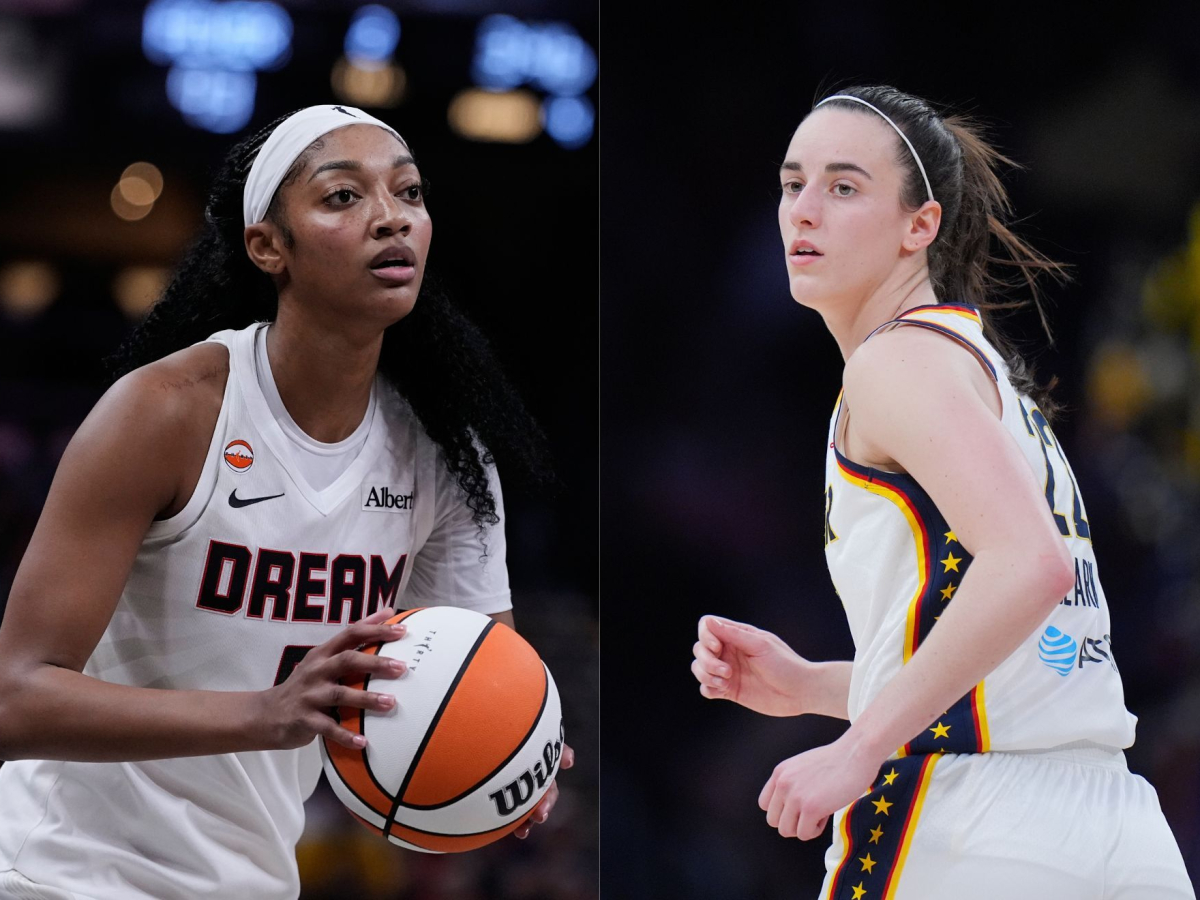
Was Chicago playing Clark with excessive physicality? Was Reese allowing the history surrounding their rivalry to influence her decision? Or had a legitimate defensive attempt simply produced dangerous contact?
The available evidence strongly supports one conclusion but cannot prove another.
Reese clearly attempted to make a play on the ball. Her arm was directed toward the basketball as Clark elevated. There is no verified evidence that she entered the possession intending to strike Clark’s head.
Intent, however, is not the only consideration in a flagrant review.
Reese was trailing the play and swung with enough force to make significant contact above Clark’s shoulders. Even if the motion began as a block attempt, the officials could still determine that the result was unnecessary and potentially dangerous.
That difference—between purpose and outcome—became the center of the controversy.

Reese described the incident as a basketball play. She also expressed frustration with the officiating, arguing that calls had affected the game and suggesting Chicago had not received the same treatment on other physical possessions.
Clark’s response was more unexpected.
Instead of accusing Reese of intentionally targeting her, Clark said Reese had been trying to make a play on the ball. Her immediate concern after hitting the floor was making the two free throws.
That response disrupted the most sensational interpretation of the incident.
Clark had every opportunity to frame the foul as personal retaliation. Doing so would have reinforced the narrative surrounding her treatment during the opening weeks of her rookie season. Instead, she separated the physical result from Reese’s probable intention.
The distinction did not erase the foul. It made the analysis more precise.
Reese’s strongest defense is that defenders cannot challenge shots without risking contact. Players moving at professional speed must make decisions in fractions of a second, and a clean block attempt can become a hard foul when the offensive player changes angle or elevation.
Clark appeared to recognize that reality.
The criticism of Reese focuses on control. A defender approaching from behind has limited visibility and little margin for error. Swinging forcefully near an opponent’s head carries responsibility even when the ball is the intended target.
That is why the Flagrant 1 and Clark’s defense of Reese can coexist. The officials classified what happened. Clark commented on what she believed Reese was trying to do.
Indiana won the game 91–83. Clark finished with 23 points, nine assists and eight rebounds, producing what was then one of her strongest all-around WNBA performances. Reese recorded 11 points, 13 rebounds and five assists.
The incident also demonstrated Clark’s ability to remain composed.
She made both free throws and stayed focused as Indiana secured its second consecutive victory. Rather than allowing the foul to define her performance, she answered through execution.
For Reese, the moment became inseparable from her criticism of the officiating. She believed she had made a basketball play and questioned why similar contact elsewhere had not produced the same calls.
That complaint created another debate. Some viewers saw a player refusing responsibility for dangerous contact. Others saw a rookie expressing frustration with inconsistent enforcement in a physical game.
The most productive interpretation sits between those extremes.
Reese was entitled to contest the shot. Clark was entitled to protection from unnecessary contact to the head. The replay system existed to resolve exactly that kind of collision, and the officials used it—something they had failed to do during Carter’s earlier foul.
The upgrade therefore did not prove malicious intent. It established that a basketball action can still cross the flagrant threshold when it is executed without sufficient control.
Most importantly, Clark and Reese did not use the moment to intensify their personal rivalry. Both described it as part of basketball, even as fans and commentators continued attaching larger motives to it.
That restraint would become even more significant in Part 3.
Nearly a year later, the roles would reverse. Clark would deliver the hard foul. Reese would hit the floor and rise in anger. Once again, both players would tell the public not to make the incident into something more.
This time, their bodies on the court would make that message much harder to accept.


