Pattie Boyd Has Spoken Candidly About Eric Clapton’s Addiction and Destructive Behavior, but the Viral “Escape Alive” Audio Is Unverified
Pattie Boyd has spent years dismantling the polished romantic mythology surrounding her marriage to Eric Clapton.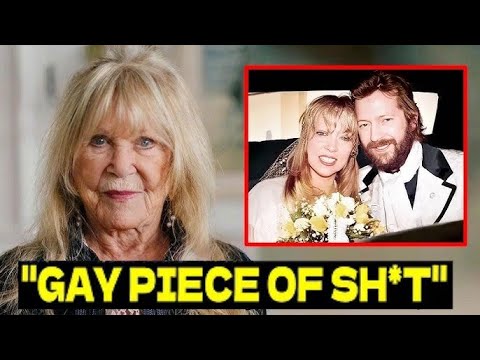
That part of the story is real.
The woman who inspired “Layla” and “Wonderful Tonight” has described a relationship overshadowed by alcoholism, infidelity, emotional instability and behavior she found increasingly difficult to endure.
But the newest viral claim adds details that are not supported by credible evidence.
There is no authenticated newly leaked ten-second recording in which Boyd tearfully describes packing one suitcase in the middle of the night because she believed she had to escape Clapton alive.
There is no verified cache of “estate diary entries” proving that exact event.
And no reliable current source reports Boyd making a new 2026 disclosure accusing Clapton of imprisoning her inside their home.
The genuine record is already troubling without those additions.
Boyd married Clapton in 1979 after one of rock music’s most famous love triangles.
Clapton had become obsessed with Boyd while she was married to his friend George Harrison.
His unrequited passion helped inspire “Layla.”
Later, during their relationship, “Wonderful Tonight” became another song permanently associated with Boyd.
Those songs helped create an extraordinarily romantic public narrative.
The reality of the marriage was much less romantic.
Boyd has openly said that when she married Clapton, she was dealing with a man who was seriously unwell because of alcohol abuse.
In a 2008 interview, she described their relationship as unhealthy and said his drinking changed the balance between them.
That is not rumor.
It is Boyd’s own retrospective account.
She also said both Clapton and Harrison had been deeply unfaithful and destructive during their marriages to her.
Her description complicates the sentimental mythology that grew around the songs.
Being someone’s muse did not guarantee being treated well by that person.
Boyd has said that she gave enormous amounts of herself to both men, sometimes to her own detriment.
That statement may be more revealing than any supposed secret recording.
The public saw inspiration.
She experienced the personal cost.
Clapton’s drinking during the marriage has also been documented extensively beyond Boyd’s account.
His own autobiography describes years of extreme alcohol abuse.
A Guardian review recounts episodes from that period in which Clapton was heavily intoxicated, behaved erratically and conducted affairs while still married to Boyd.
Clapton himself has acknowledged that he was exceptionally difficult to live with during those years.
The Independent noted that he had described himself as “hell to live with” during the period when he and Boyd were together.
That admission is significant.
It means the darker account of the marriage does not depend solely upon retrospective criticism from Boyd.
Clapton himself has recognized how badly addiction affected his behavior.
The relationship also included repeated infidelity.
During the marriage, Clapton had a relationship with Yvonne Kelly that resulted in the birth of his daughter Ruth.
He later had another relationship with Lory Del Santo, with whom he had his son Conor.
Those relationships contributed to the collapse of his marriage to Boyd.
That history is established.
The viral language about “severe isolation” is more complicated.
Boyd has certainly described the emotional loneliness of being married to extraordinarily famous, self-destructive men.
She has spoken about losing a sense of herself inside those relationships.
After separating from Clapton, Boyd said she reached a point where she wondered who she was without being identified primarily as the wife of a famous musician.
She eventually sought psychotherapy.
Boyd said that therapy helped guide her out of a period of profound emotional difficulty and gradually rebuild her confidence.
That is a well-documented psychological aftermath.
It is not evidence that Clapton literally imprisoned her inside an estate.
The phrase “psychological prison” can work as metaphor.
Presented as a factual description of physical confinement or forced isolation, however, it requires stronger evidence.
No reliable source reviewed establishes that Boyd was physically prevented from leaving their home.
No current interview says guards kept her inside.
No legal record establishes false imprisonment.
No contemporaneous police report has been produced showing she was held against her will.
The marriage could be emotionally damaging without involving literal confinement.
That distinction matters.
Clapton’s controlling behavior has also been discussed in older writing about Boyd’s memoir.
A Guardian review of Clapton and Boyd’s accounts referred to the “control freakery” that dominated aspects of their relationship.
That language provides legitimate historical support for describing the marriage as controlling.
It still does not authenticate the new viral scenario.
The claim says Boyd has only now, at 80, “finally come forward.”
That is plainly misleading.
Boyd published her autobiography Wonderful Today in 2007.
She has been discussing her marriages to Harrison and Clapton publicly for nearly two decades.
Her views are not newly discovered.
She has repeatedly spoken about addiction.
She has spoken about infidelity.
She has spoken about unhealthy relationship dynamics.
She has spoken about losing her identity.
She has spoken about therapy.
She has spoken about the gap between romantic songs and domestic reality.
There is no need for a 2026 secret tape to discover those facts.
The title “Wonderful Tonight” itself has taken on a different meaning through Boyd’s recollections.
She has explained that the famous song emerged while Clapton was waiting impatiently for her to finish getting ready.
In a 2006 interview, she joked that the supposedly romantic moment was partly Clapton essentially telling her she looked fine so they could finally leave.
That anecdote does not make the song insincere.
It does challenge the heavily idealized mythology surrounding it.
Boyd has spent years doing exactly that.
She has taken iconic cultural moments and explained the more complicated realities behind them.
Her famous relationship with Clapton began in equally complicated circumstances.
Clapton pursued Boyd while she was still married to Harrison.
Letters revealed publicly in 2024 show the intensity of that pursuit.
One surviving letter asked whether Clapton was an inadequate lover or unattractive after Boyd had not responded as he hoped.
Another expressed his desire for her in highly dramatic terms.
Those letters were not “leaks.”
Boyd herself offered them for sale through Christie’s.
The auction brought renewed attention to one of rock history’s most famous romantic entanglements.
That distinction illustrates how genuine archival evidence normally works.
The letters had provenance.
Boyd owned them.
Christie’s catalogued them.
The public could inspect them.
News organizations could report them accurately.
The supposed new audio has none of those verification features.
No archive has identified the recording.
No auction house has listed it.
No memoir publisher has announced it.
No interviewer has explained when it was recorded.
No original source has been established.
No full recording has surfaced through a reputable publication.
Without those elements, “archival audio” is only a label.
The viral claim’s precise “ten-second” duration should also invite skepticism rather than confidence.
Ten seconds is long enough to create a dramatic social clip.
It is rarely long enough to establish context.
Who was Boyd speaking to?
When?
Was she reading from her book?
Was she discussing Clapton?
Was she discussing Harrison?
Was the audio edited from a longer interview?
Was the voice even Boyd’s?
Those questions matter.
A short audio clip cannot answer them by itself.
The alleged “estate diary entries” have an even larger provenance problem.
Boyd has possessed a substantial personal archive.
Her photographs, letters and memorabilia have been displayed and sold publicly.
In 2024, her Christie’s collection sold for almost £3 million.
That sale included letters from Clapton, photographs, artwork and other deeply personal material.
If previously unknown diaries documenting an extraordinary escape existed and were now entering public circulation, a legitimate archival trail would be expected.
No credible current source reports such a discovery.
No institution has authenticated handwriting.
No page dates have been independently confirmed.
No original diary has been exhibited.
No chain of custody has been described.
The viral post simply calls them “leaked estate diary entries.”
That is not enough.
Boyd’s age is another useful reality check.
She was 80 when her Christie’s collection sold in March 2024.
She was born in March 1944.
In September 2026, she is 82, not 80.
That does not determine whether the larger claim is true.
It does show that the viral caption is recycling older biographical material rather than accurately presenting a fresh 2026 interview.
The age likely comes from coverage surrounding her 2024 auction.
That coverage repeatedly identified her as 80.
The new post appears to have preserved that number while presenting the story as current.
This is a common sign of recycled celebrity content.
Old interview.
Old age.
New sensational framing.
Then an invented “leak” is added to make the material appear newly explosive.
Boyd’s recent public image also differs from the idea that she has suddenly reopened her past through a traumatic confession.
In 2024, she spoke positively about moving forward as she sold letters, photographs and memorabilia from her relationships with Harrison and Clapton.
She said it was time for those objects to enter their next chapters and emphasized the joy and new adventures in her present life.
That does not mean she has forgotten painful experiences.
It demonstrates that her relationship with the past is more nuanced than a sudden 2026 breakdown.
Boyd has repeatedly combined affection with criticism.
She remained friends with both Harrison and Clapton after their marriages ended.
The Independent reported that she and Clapton remained friendly after their divorce.
That fact should not be used to dismiss or minimize harmful behavior.
People can maintain complicated relationships with former partners.
It does show why simplistic victim-villain narratives can flatten decades of history.
Boyd has criticized Clapton sharply.
She has also spoken without presenting every memory as terror.
Both realities deserve acknowledgment.
Her sister Jenny Boyd provides additional evidence about how severe Clapton’s drinking could become.
In an interview about her own memoir, Jenny described spending time with Pattie and Clapton during a period when both were drinking heavily around the clock.
She said alcohol could make Clapton verbally abusive.
Jenny also recounted an incident in which Clapton behaved inappropriately toward her while Pattie was elsewhere in the house.
That testimony reinforces the darker portrait of the period.
Again, the verified material is already serious.
There is no need to add an unsupported midnight escape sequence.
The phrase “addiction-fueled paranoia” also needs care.
Clapton’s heroin addiction during the early 1970s is well documented.
His later alcoholism is also well documented.
But diagnosing specific paranoia requires evidence.
A person can behave jealously, possessively or irrationally while intoxicated without a retrospective observer being able to establish a psychiatric symptom.
No credible current Boyd interview reviewed uses a clinical diagnosis of paranoia to explain the marriage.
The safer description is that addiction contributed to erratic, controlling and destructive behavior.
That is supported.
Calling the home a “psychological prison” similarly works only if clearly understood as Boyd’s emotional experience or metaphor.
It should not be converted into a factual claim that she was physically trapped.
The viral post blurs that distinction deliberately.
It takes emotional language and presents it like a hidden crime scene.
Boyd’s actual statements are more psychologically complex.
She has even reflected on her own role in unhealthy relationships.
In 2008, she said she became accustomed to feeling in control when Clapton was ill from alcohol abuse and acknowledged that the dynamic itself became unhealthy for her.
That kind of self-reflection does not excuse Clapton’s behavior.
It shows Boyd was trying to understand the relational system rather than reducing everything to a single escape moment.
She described a marriage shaped by addiction, celebrity, infidelity and emotional dependency.
That is more complicated than the viral “monster behind locked gates” narrative.
Boyd eventually left the marriage.
She and Clapton divorced in 1989.
She later explained that after losing the identities attached to being Mrs. George Harrison and Mrs. Eric Clapton, she had to rediscover herself.
Her psychotherapy became part of that process.
She developed a career as a photographer.
She published books.
Her exhibitions traveled internationally.
She eventually married property developer Rod Weston.
That later life is important.
Boyd was not permanently defined by being the subject of famous men’s songs.
Her story became increasingly about her own work.
The mythology of “the muse” can erase that independence.
Boyd herself has discussed what being a muse actually meant to her.
She once said it involved giving herself deeply to another person, sometimes at her own expense.
That insight reveals why romanticizing “Layla” and “Wonderful Tonight” can obscure the woman behind them.
The songs survive as cultural monuments.
The marriage did not.
The question is not whether Boyd experienced dark aspects of life with Clapton.
She clearly says she did.
The question is whether the newly circulating details are authentic.
At present, they are not verified.
No credible evidence establishes a new 2026 confession.
No credible source authenticates ten seconds of memoir audio.
No reputable archive identifies the recording.
No verified diary documents the exact one-suitcase midnight escape.
No reliable report says Boyd claimed she feared she would die if she stayed that night.
Those specifics matter.
A dramatic story can be broadly consistent with a difficult marriage while still being false in detail.
That is exactly why fact-checking celebrity history is difficult.
Real pain makes invented scenes feel plausible.
Clapton’s addiction was real.
His infidelity was real.
Boyd’s unhappiness was real.
His difficult behavior was acknowledged by both Boyd and Clapton.
Control within the relationship has been described publicly.
Those facts create a credible emotional background.
They do not authenticate every cinematic scene attached to them decades later.
The story of “Layla” itself demonstrates how mythology builds.
The song began as Clapton’s expression of desperate love for Boyd while she was married to Harrison.
Its title was inspired by the Persian story of Layla and Majnun, a tale of obsessive and impossible love.
That connection encouraged generations of listeners to treat Clapton’s pursuit as grand romantic destiny.
From Boyd’s perspective, however, living inside the aftermath was considerably messier.
Love triangles involve betrayal.
Addiction involves chaos.
Fame complicates boundaries.
Songs turn private relationships into public property.
Boyd had to live with strangers believing they understood her marriage because they knew the records.
Her memoir pushed back against that simplification.
But correcting one myth should not create another.
The romantic fairy tale can be inaccurate without the opposite extreme being automatically true.
Clapton can have behaved badly without every unverified claim of terror being factual.
Boyd can have suffered emotionally without having literally fled for her life.
Her home can have felt oppressive without being a literal prison.
Historical accuracy allows those distinctions.
Clapton’s own retrospective account also deserves inclusion because it supports rather than eliminates much of Boyd’s criticism.
His autobiography acknowledges severe substance abuse and marital infidelity.
He described behavior during his drinking years that was chaotic and deeply damaging.
That corroboration gives the historical record weight.
It means no secret audio is required to establish that their marriage was troubled.
The record is already public.
Likewise, Boyd does not need to “finally” reveal anything.
She already did.
Her 2007 memoir did it.
Her later interviews did it.
Her reflections on addiction did it.
Her comments about infidelity did it.
Her discussion of psychotherapy did it.
Her decision to auction intimate correspondence did it.
The new viral story takes a woman who has spoken openly for years and pretends she has remained silent until now.
That framing is inaccurate.
The strongest evidence available as of September 30 therefore produces a clear separation.
Verified: Pattie Boyd was the inspiration behind “Layla” and “Wonderful Tonight.”
Verified: she married Eric Clapton in 1979 and divorced him in 1989.
Verified: Boyd has said Clapton suffered severely from alcohol abuse during their marriage.
Verified: she described both Clapton and Harrison as unfaithful and destructive partners.
Verified: older commentary on her memoir describes controlling behavior in her relationship with Clapton.
Verified: Clapton himself has acknowledged being extremely difficult to live with during those years.
Verified: his alcoholism and affairs during the marriage are extensively documented.
Verified: Boyd sought psychotherapy after the marriage ended and described rebuilding her identity afterward.
Unverified: Boyd has just made a new bombshell confession in 2026.
Unverified: an archival ten-second clip captures her breaking down over a midnight escape.
Unverified: she said she packed one suitcase because she feared for her life.
Unverified: leaked estate diaries prove that scene.
Unverified: the tapes are being suppressed or removed.
There is also a basic factual error in the viral presentation.
Boyd is not 80 today.
She turned 82 in March 2026.
The “80-year-old” wording matches 2024 reporting around her Christie’s auction rather than her current age.
That is a strong sign that an older Pattie Boyd story has been repackaged as breaking news.
The underlying history remains compelling.
Pattie Boyd inspired some of rock music’s most romantic songs while living through relationships that were often anything but romantic.
Eric Clapton pursued her obsessively.
His addiction later damaged their marriage.
His infidelity further destabilized it.
Boyd lost parts of her own identity inside relationships with two globally famous musicians.
She eventually left, sought therapy and rebuilt a life centered increasingly on her own photography and writing.
Those facts are documented.
The supposed leaked “escape alive” confession is not.
The romantic façade surrounding Boyd and Clapton deserves scrutiny.
But it should be dismantled with Boyd’s actual words, not with an unverified recording placed in her mouth.


