Donald Trump’s latest diplomatic effort involving Russia was supposed to demonstrate progress, influence, and a path toward ending the war in Ukraine.
Instead, the meeting in Moscow has triggered a wave of criticism over the people representing the United States, the tone of the discussions, and whether Washington is gaining leverage or surrendering it.
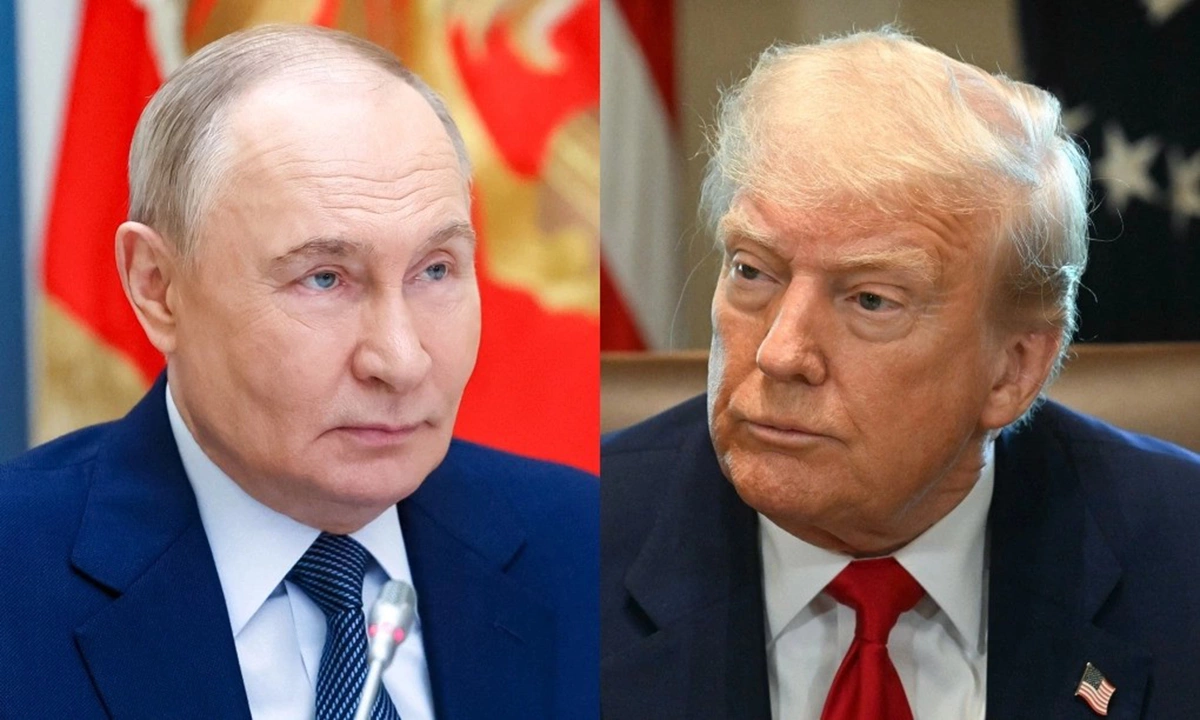
At the center of the controversy are Trump’s representatives Steve Witkoff and Jared Kushner, who met with Russian President Vladimir Putin in Moscow.
The meeting was already highly scrutinized because of the enormous stakes surrounding the war in Ukraine.
But one moment quickly became the focus of intense criticism.
As the meeting began, Witkoff thanked Putin for hosting the American delegation and spoke about how the participants would eventually have incredible stories and memories from the meeting.
To critics, the tone was deeply uncomfortable.
Instead of projecting pressure toward Moscow, they argued that the opening appeared unusually deferential toward Putin at a moment when Russia’s war against Ukraine remains one of the most consequential geopolitical conflicts in the world.
That perception created an immediate question.
Did the meeting strengthen the American negotiating position, or did it make the Russian president appear to be the person holding the advantage?
The controversy became even more intense because of comments from Keith Kellogg, a former Trump envoy who has previously been involved in discussions surrounding Ukraine.
Kellogg questioned whether Witkoff and Kushner possess the diplomatic experience necessary for negotiations of such extraordinary complexity.
His criticism was blunt.
He described them as real-estate figures and questioned what diplomatic experience they brought to negotiations involving war, national security, territorial disputes, and relations between major powers.
That criticism goes directly to the heart of the controversy.
Negotiating a business transaction is fundamentally different from negotiating an international conflict involving sovereignty, military operations, alliances, sanctions, territorial claims, and decades of historical distrust.
And that distinction is becoming increasingly important as Trump continues to rely on unconventional diplomatic channels.
For Trump, the strategy appears to be based partly on personal relationships and direct negotiations rather than relying exclusively on traditional diplomatic structures.
Supporters could argue that unconventional negotiators can sometimes achieve breakthroughs precisely because they are not trapped by traditional diplomatic procedures.
Critics, however, see a different danger.
They argue that personal relationships can become liabilities when dealing with a leader as experienced and strategically calculating as Putin.
The question is therefore not simply whether Witkoff and Kushner can speak with Putin.
They clearly can.
The bigger question is whether they can negotiate with him from a position of strength.
That distinction matters.
A meeting can be friendly without producing meaningful results.
A handshake can generate headlines without generating concessions.
And a lengthy conversation can create the appearance of progress without actually changing the underlying balance of power.
That is why the Moscow meeting has become so politically explosive.
The optics are only one part of the problem.
The larger issue concerns what happens after the cameras disappear.
Russia continues to pursue its military objectives in Ukraine.
Ukraine continues to face devastating attacks.
And the United States remains under pressure to demonstrate that its diplomatic strategy can actually produce a durable outcome.
Trump has repeatedly portrayed himself as uniquely capable of negotiating with powerful foreign leaders.
His political brand has long depended on the image of being a master negotiator who can enter difficult situations and make deals that traditional politicians cannot.
During the 2024 campaign, Trump repeatedly claimed that he could end the war in Ukraine rapidly.
That promise created enormous expectations.
But the conflict did not disappear.
Instead, the diplomatic challenge became more complicated.
The longer the war continues, the harder it becomes for Trump to argue that personal diplomacy alone can quickly resolve it.
That is why every meeting with Putin now carries enormous political weight.
If the meeting produces measurable progress, Trump can point to it as evidence that his strategy is working.
If it produces little or nothing, opponents can argue that the administration is giving Russia diplomatic attention without securing sufficient concessions.
And that is precisely where the latest controversy begins.
One of the most striking criticisms concerns the apparent closeness between Witkoff and Putin.
According to the account presented in the discussion surrounding the meeting, Witkoff has previously expressed significant respect for his relationship with the Russian president.
Critics see that relationship as potentially problematic.
Diplomacy requires trust.
But negotiation also requires skepticism.
The strongest negotiator is not necessarily the person who has the warmest personal relationship with the opposing leader.
It may be the person who understands that every friendly gesture can coexist with a hard strategic objective.
That is especially important when negotiating with Putin.
Russia has enormous experience using diplomacy as an extension of state power.
Every meeting matters.
Every public statement matters.
Every photograph matters.
Every gesture can communicate something.
That means American officials must consider not only what is said inside the room but also how the encounter appears outside it.
And the optics of the Moscow meeting are now being debated intensely.
The criticism became sharper after reports and commentary focused on Russian military activity surrounding Ukraine.
The timing created an uncomfortable contrast.
On one side, American representatives were sitting down with Putin and emphasizing dialogue.
On the other, Ukraine continued facing military pressure.
That contrast creates one of the most difficult questions for the Trump administration.
Can Washington pursue diplomacy with Moscow while simultaneously convincing Kyiv that the United States remains firmly committed to Ukraine’s security?
That balancing act is extraordinarily difficult.
Ukraine wants meaningful security guarantees and protection against further Russian aggression.
Russia wants concessions over territory, security arrangements, NATO, sanctions, and the future political structure of Ukraine.
The United States wants an agreement that can be presented as a diplomatic victory.
Those objectives do not naturally align.
That means negotiations require enormous preparation.
They require experienced diplomats, military experts, intelligence officials, legal advisers, regional specialists, and people who understand the history of Russian foreign policy.
This is why Kellogg’s criticism has attracted so much attention.
His argument is essentially that the United States should not approach a war negotiation like a real-estate transaction.
That criticism is not merely personal.
It raises a structural question about how the Trump administration is organizing foreign policy.
Who is actually driving the negotiations?
Who determines the American objectives?
Who decides what concessions are acceptable?
Who evaluates Russian promises?
And who ensures that Ukraine’s interests are not sacrificed simply to produce a headline announcing a deal?
Those questions become even more significant when multiple diplomatic portfolios are concentrated among a small number of people.
Critics have pointed out that Witkoff and Kushner have been associated with several major diplomatic initiatives.
That creates concerns about workload, specialization, and institutional oversight.
Traditional foreign policy depends heavily on the State Department and career diplomats who spend years developing relationships and understanding individual regions.
The Trump approach has frequently emphasized trusted personal representatives instead.
There are advantages to that model.
Personal envoys can move quickly.
They can communicate directly with leaders.
They can bypass bureaucratic delays.
They can sometimes discuss ideas privately that would be difficult for formal diplomats to raise publicly.
But there are also serious risks.
If negotiations become too dependent on personalities, the process can become vulnerable to personal misunderstandings.
A leader can misread another leader.
An envoy can become overly invested in maintaining a relationship.
And an administration can become so determined to produce a deal that it begins valuing the existence of an agreement more than the quality of the agreement itself.
That is the fear many critics are expressing now.
The most important question is therefore not whether Trump met Putin.
It is what the United States received in exchange for that meeting.
Did Moscow make meaningful concessions?
Did Russia agree to restrictions on military operations?
Did Putin offer concrete guarantees?
Did Ukraine receive anything tangible?
Did the negotiations move closer to a durable peace?
Or did the meeting primarily produce another round of diplomatic headlines?
Until those questions are answered, declaring the meeting either a triumph or a failure would be premature.
But the criticism itself is significant.
The meeting has exposed a growing debate inside American politics over what effective diplomacy should look like.
Trump supporters can argue that traditional diplomacy failed to end the war and that a completely different approach was necessary.
They can point to Trump’s willingness to personally engage Putin as evidence of determination.
Opponents can respond that direct engagement is meaningless without leverage.
And that is the central argument.
Diplomacy is not simply conversation.
It is negotiation backed by power.
The United States possesses enormous economic, military, and diplomatic leverage.
The question is whether the Trump administration is using that leverage effectively.
If Putin believes Washington desperately wants a deal, Russia may have less incentive to compromise.
If Putin believes the United States is willing to walk away from negotiations, American leverage could increase.
That is why appearances matter.
If an American envoy appears excessively impressed by Putin, critics will interpret the moment as weakness.
If the American side enters the room with clear demands and demonstrates that failure to reach an agreement carries consequences, the optics change completely.
This is the larger lesson from the Moscow meeting.
The most dangerous mistake in diplomacy is confusing access with influence.
Having a meeting with Putin does not automatically mean having leverage over Putin.
Being welcomed into the Kremlin does not mean Russia is prepared to surrender its strategic objectives.
And being able to speak privately with the Russian president does not guarantee that the resulting negotiations will benefit American or Ukrainian interests.
The Trump administration now faces the difficult task of proving that its unconventional diplomacy can deliver something concrete.
The pressure will only increase as the war continues.
Every Russian military strike makes negotiations more politically complicated.
Every Ukrainian casualty increases the urgency for a diplomatic solution.
Every American promise creates another expectation.
And every meeting with Putin becomes another test of Trump’s claim that his negotiating approach can accomplish what previous administrations could not.
For Witkoff and Kushner, the challenge is even more immediate.
They must demonstrate that their access to Putin translates into results.
They must show that personal diplomacy does not mean personal accommodation.
And they must convince skeptics that the United States is not simply participating in negotiations for the sake of appearances.
The criticism from Kellogg has made that challenge much more difficult.
His remarks effectively put the experience and qualifications of the administration’s chosen negotiators under a microscope.
And once that question is raised publicly, every future diplomatic move will be examined through the same lens.
The next meeting will not simply be judged by whether Trump’s representatives shake hands with Putin.
It will be judged by what changes afterward.
Does Russia alter its position?
Does Ukraine gain meaningful security?
Do negotiations produce an enforceable framework?
Do military attacks decrease?
Does the United States obtain concrete concessions?
Those are the metrics that ultimately matter.
For now, the Moscow meeting has produced something very different from a clean diplomatic victory.
It has produced controversy.
It has raised questions about strategy.
It has intensified scrutiny of Trump’s envoys.
And it has reopened the debate over whether unconventional diplomacy is delivering results or simply creating dramatic moments.
The most important development may therefore come after the meeting rather than during it.
If tangible progress follows, Trump will have an opportunity to argue that critics underestimated his strategy.
If nothing changes, the opposition will have an even stronger argument that the administration’s diplomatic approach is fundamentally flawed.
Either way, the pressure is now on.
The meeting with Putin was supposed to demonstrate that Trump’s personal diplomacy could change the trajectory of the war.
Instead, it has created a new test. Can Trump turn access into leverage?
Can his envoys turn conversation into concessions?

And can Washington secure a peace agreement without allowing Russia to dictate the terms?
Those questions remain unanswered.
And until they are, the claim that Trump’s Putin meeting was a breakthrough remains just that — a claim.
The real verdict will come from what happens next.


